The definition in one sentence
Stress Corrosion Cracking (SCC) is the cracking of a metal under the combined influence of a corrosive environment and mechanical tensile stress, without the metal as a whole corroding visibly.
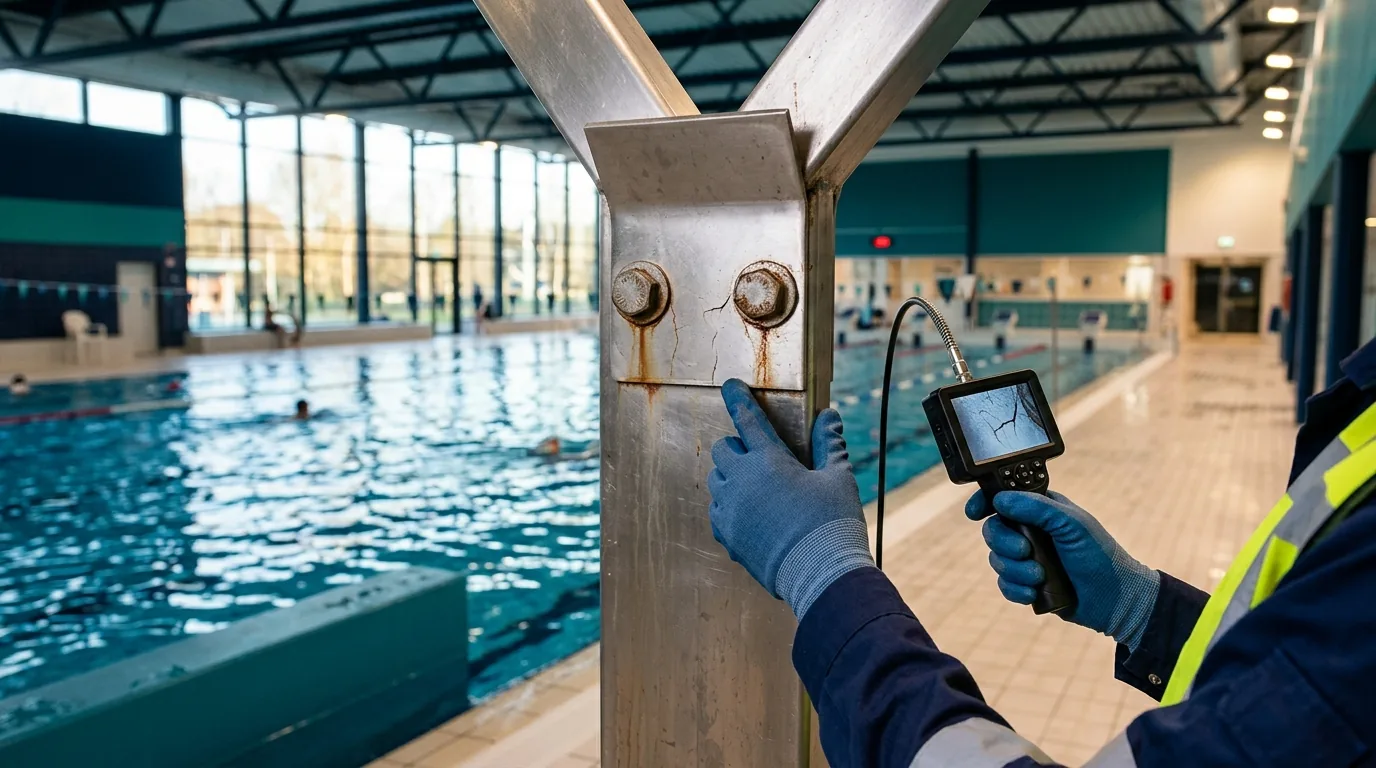
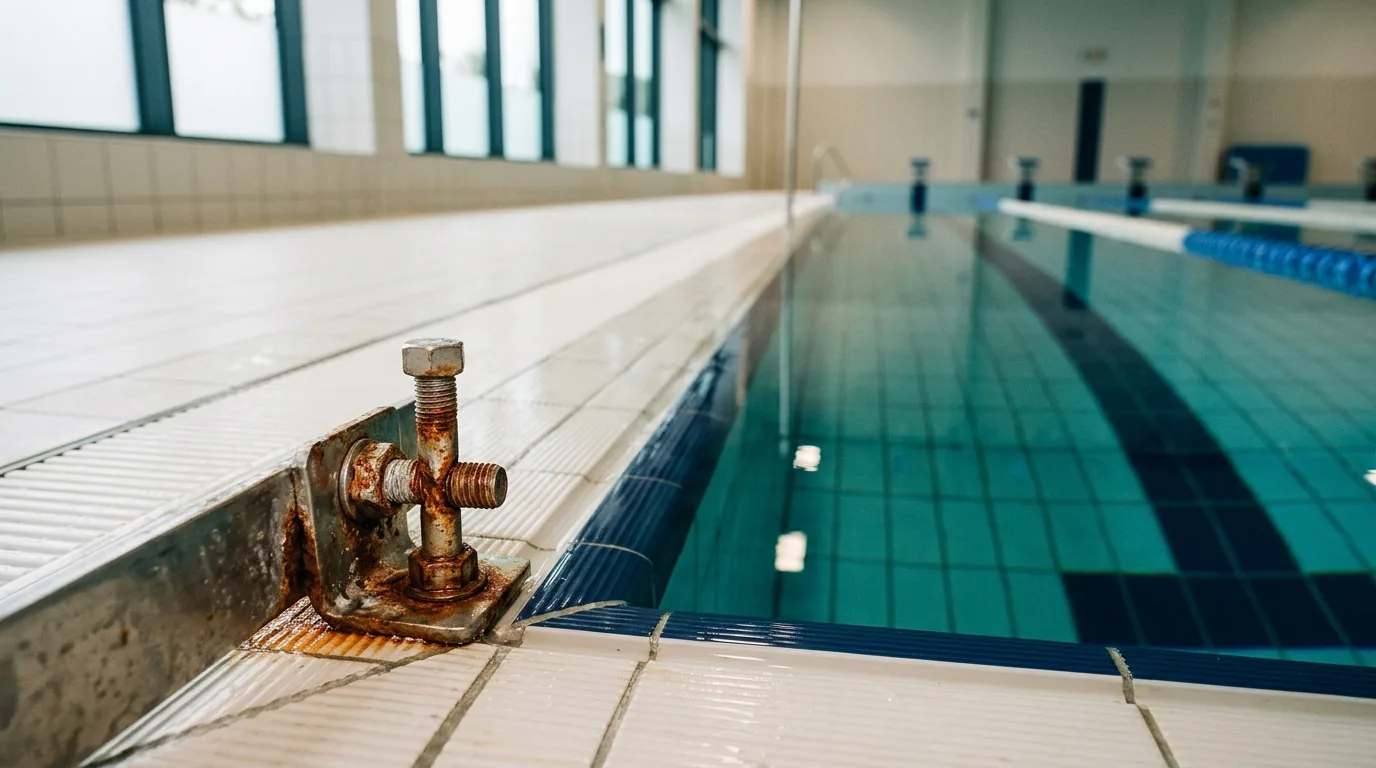
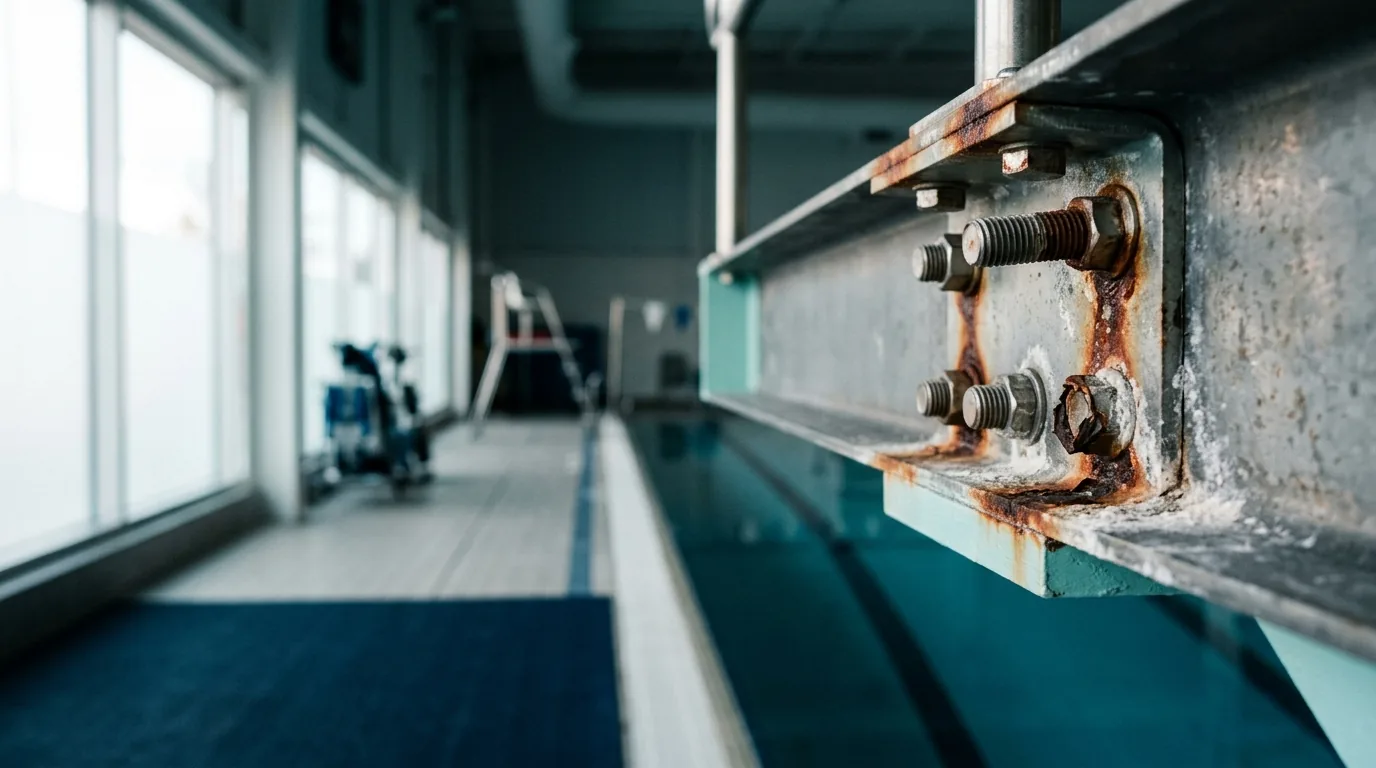
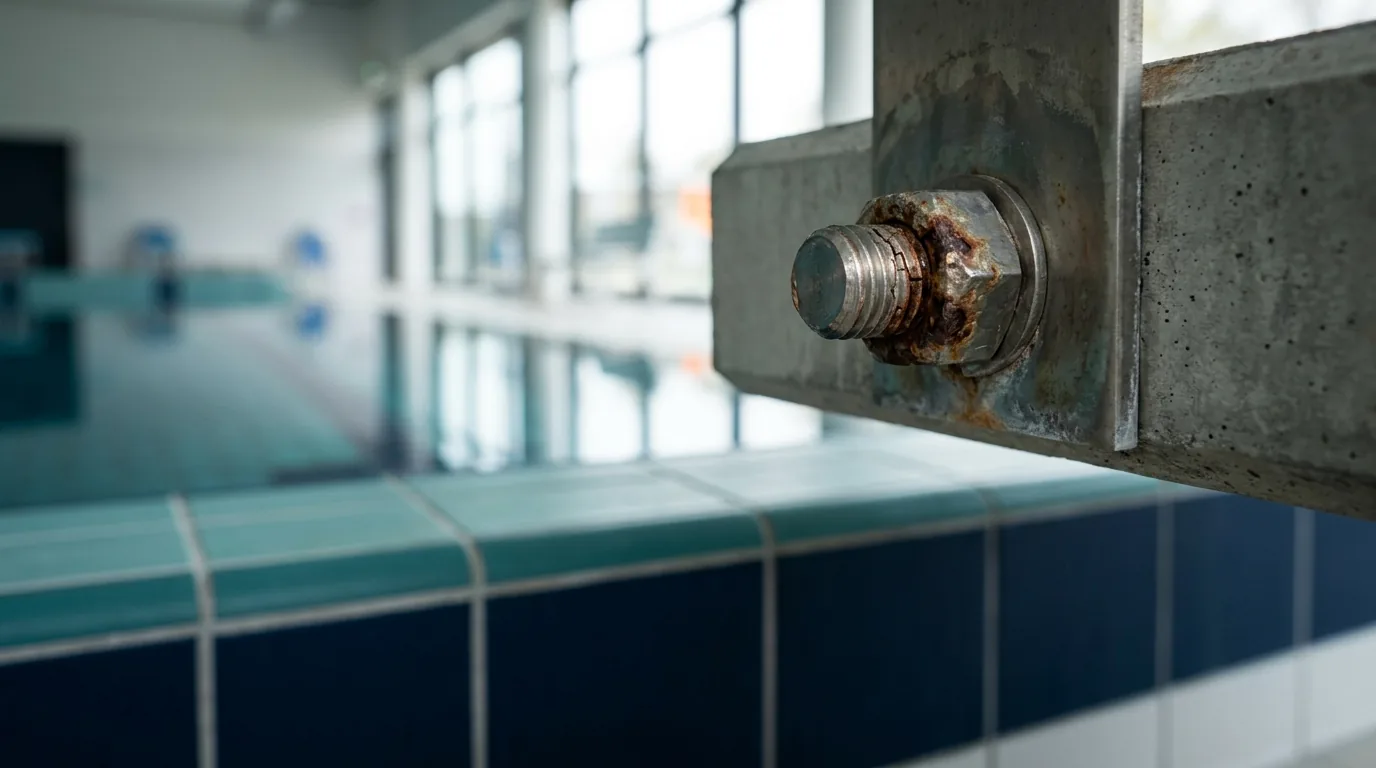
For a pool manager, this translates into one crucial fact: a fastener that still looks perfect on the outside can be completely weakened on the inside.
The triangle model of SCC
Stress corrosion cracking requires three ingredients — remove one and the mechanism stops:
- A susceptible material (classic austenitic RVS such as 304 or 316).
- A corrosive environment (chloride-containing air or water — typically a swimming pool).
- Permanent tensile stress (pre-tensioned bolts, clamping force, dead weight).
Why temperature is the accelerator
Above 50°C, SCC proceeds exponentially faster. But even at 25-30°C — the typical air temperature above a swimming pool — the process continues, just more slowly. That is why SCC incidents often only become visible after 8-15 years, while the damage has been underway for years.
How do you identify risk areas in your pool?
- Ceiling fasteners directly above the water surface.
- Unwashed corners and crevices where chlorides accumulate.
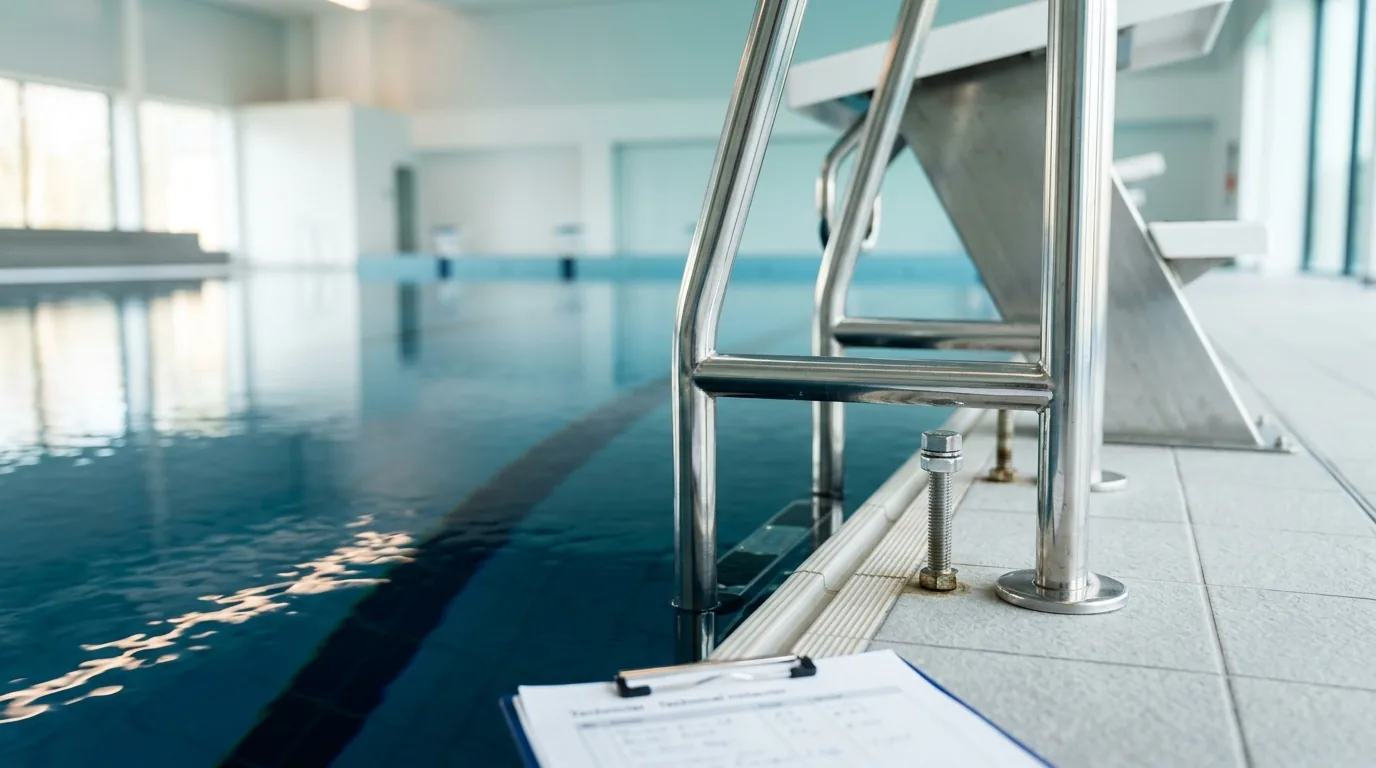
- Connections under permanent tensile load (suspension anchors, handrails).
- Fasteners older than 10 years without documented inspection.