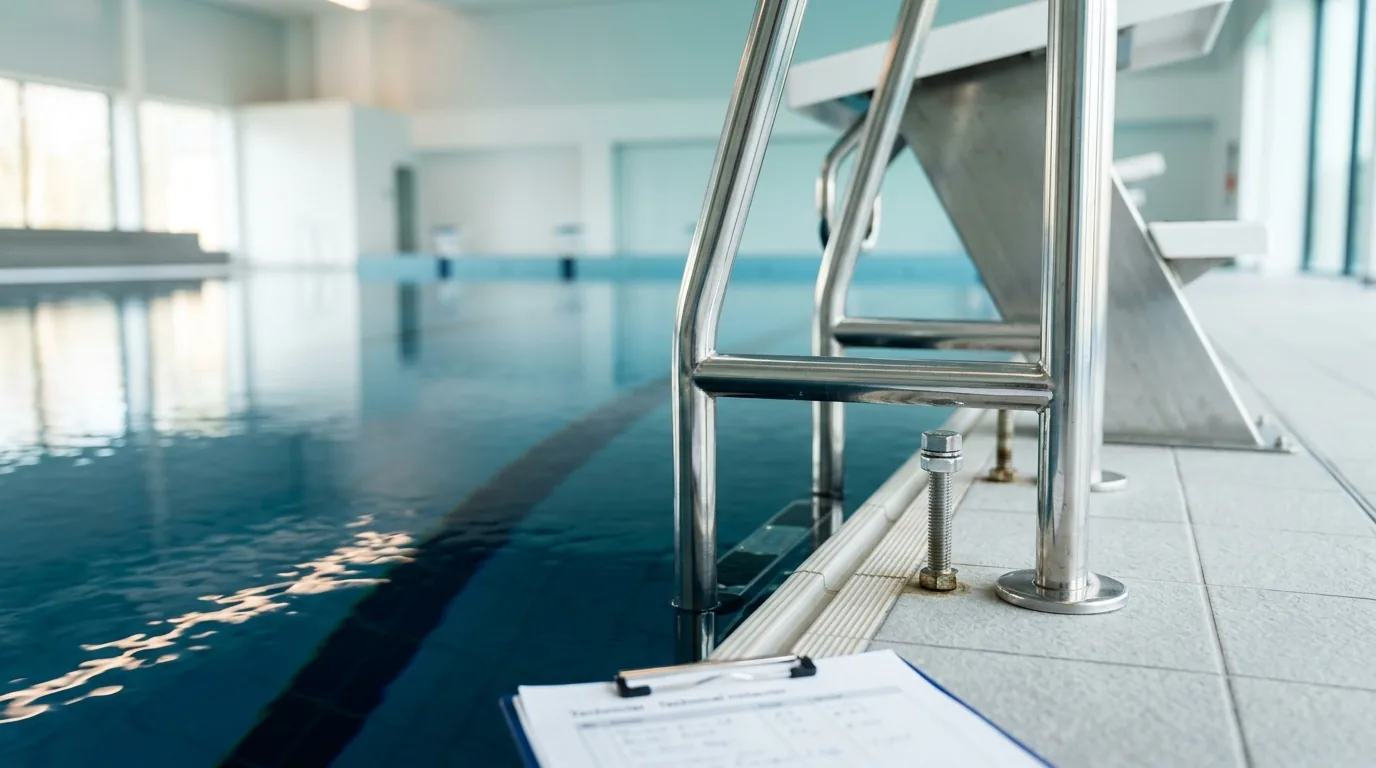
Not everything old is dangerous
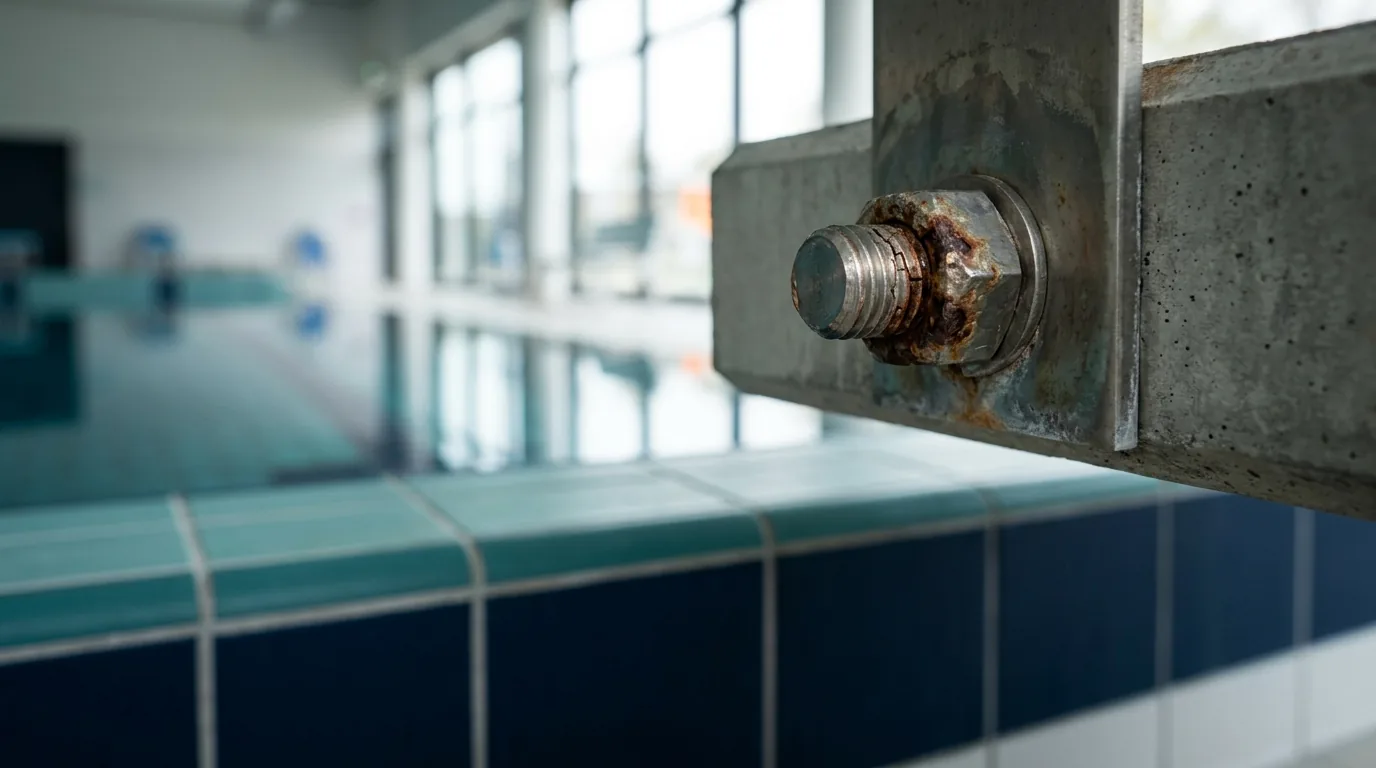
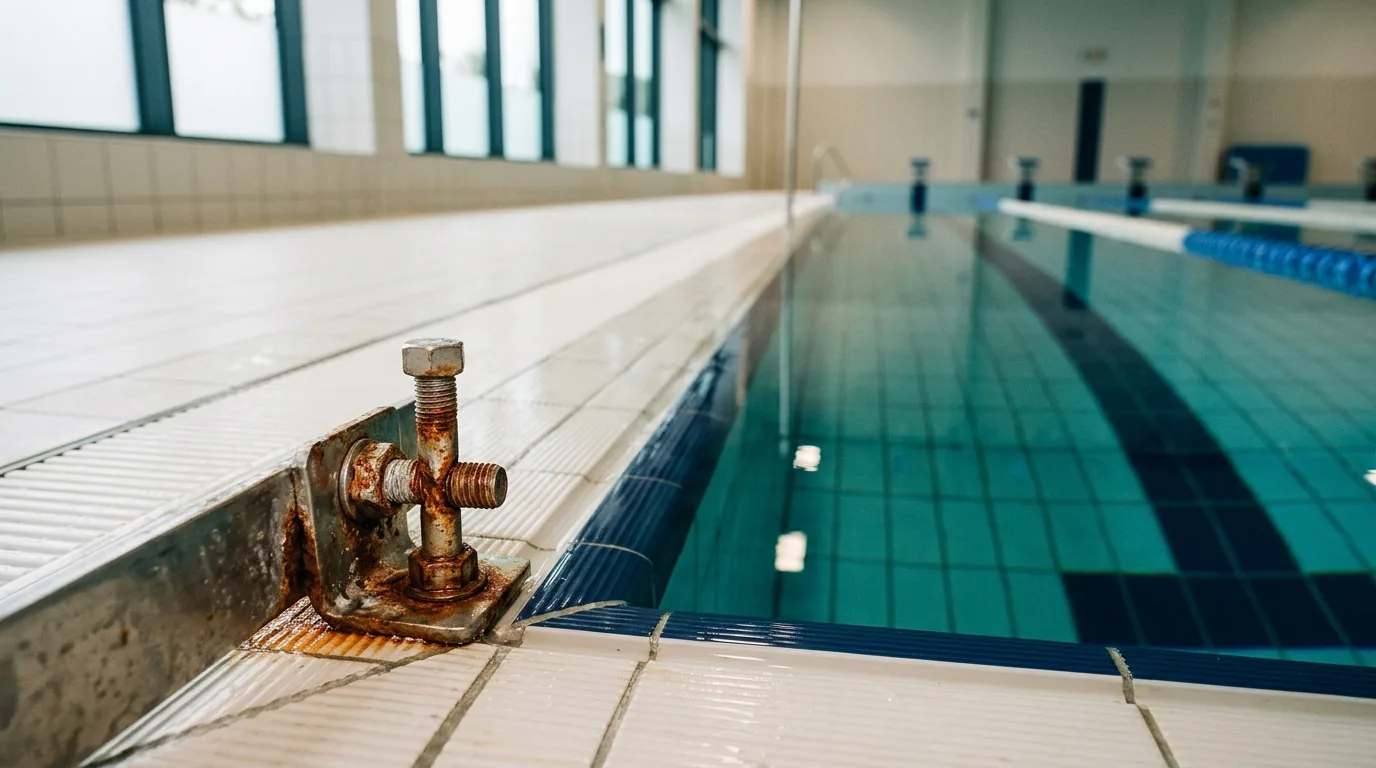
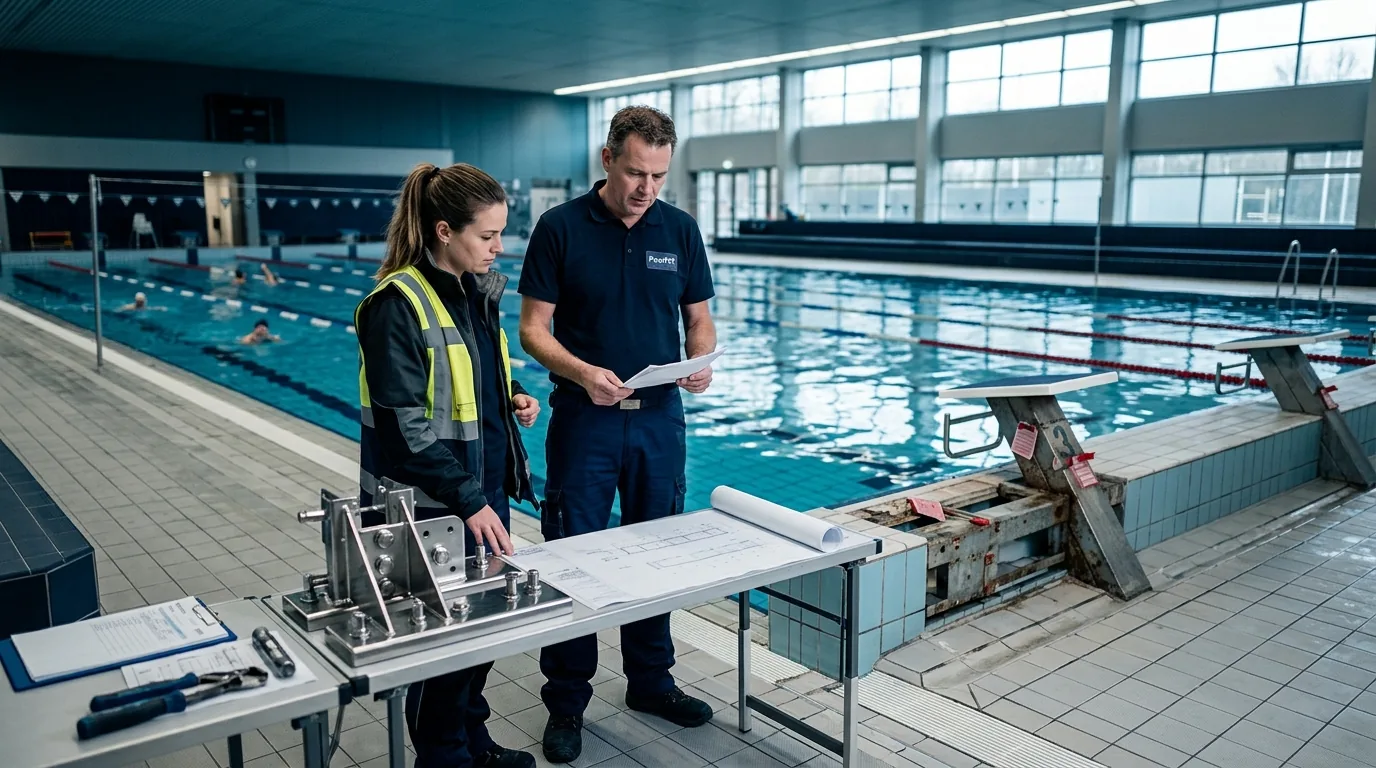
If you immediately replace every RVS bolt in your pool, you will likely spend a lot of money on points that are not critical at all. The correct approach is risk-based: which connections are truly critical to safety, and which are not?
Three risk classes — three strategies
Below is a workable prioritization model:
- Class A (immediate replacement): overhead fastenings above the public, handrails, slide foundations — failure here has direct injury consequences.
- Class B (replace within 12 months): structures under permanent tensile load in the splash zone, older than 10 years.
- Class C (monitor): non-safety-critical fastenings more than 1m above the waterline — visual inspection every 12 months.
How do you know which connection belongs to which class?
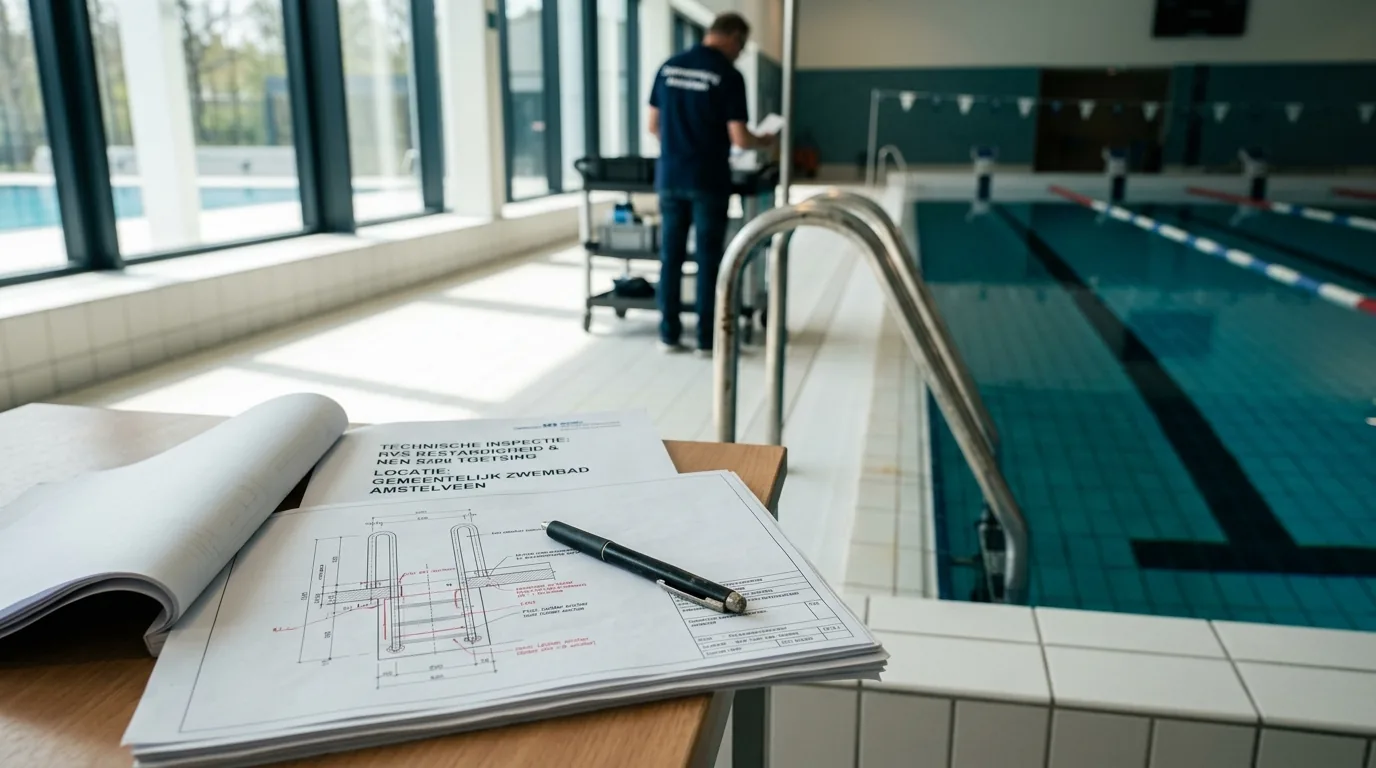
A professional risk analysis according to NEN 9200 classifies every connection. Do you not have a risk analysis? Then that in itself is an action point. Our Compliance Check gives you an initial indication within 60 seconds.