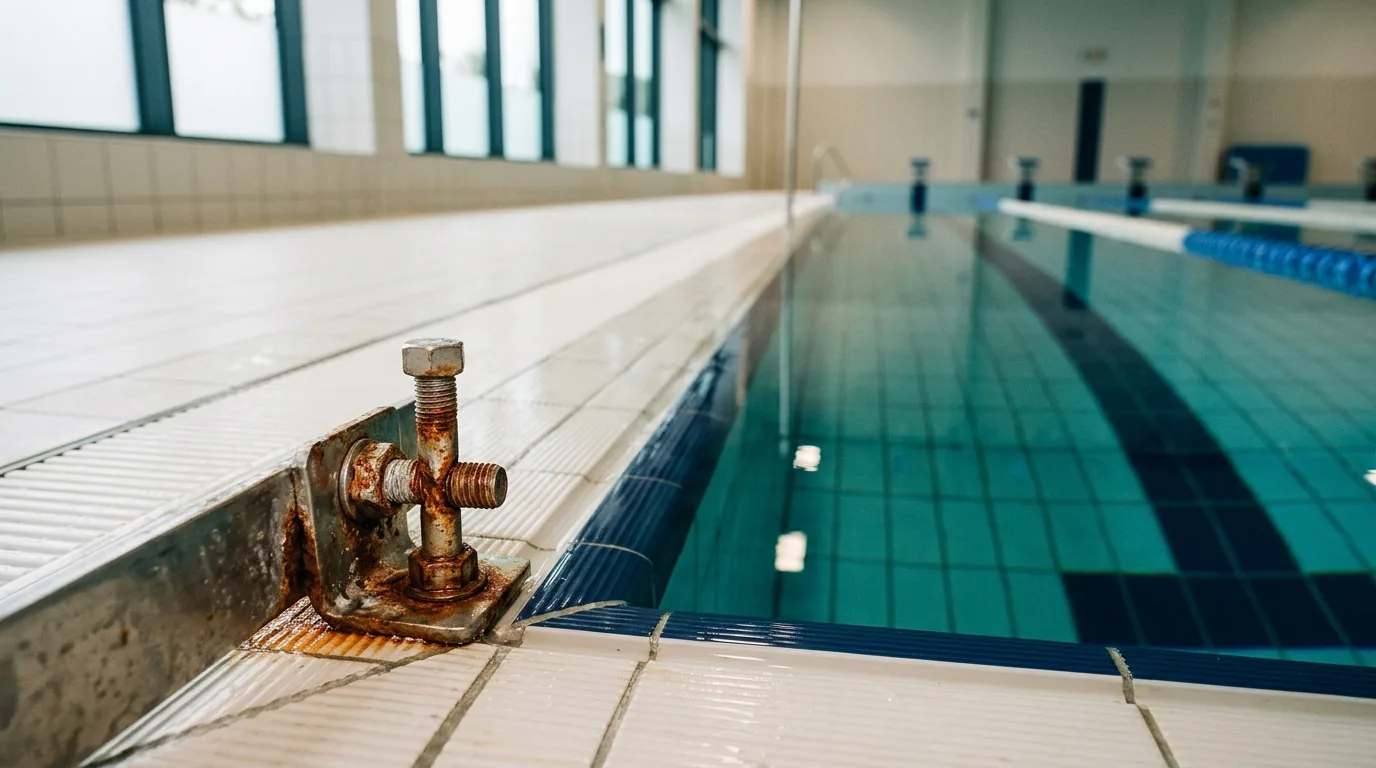
RVS in swimming pools: the illusion of safety
For most constructors and installers, stainless steel is naturally the material of choice when it comes to durable, corrosion-resistant fastenings. In normal indoor climates, this holds true — but a swimming pool is not a normal indoor climate.
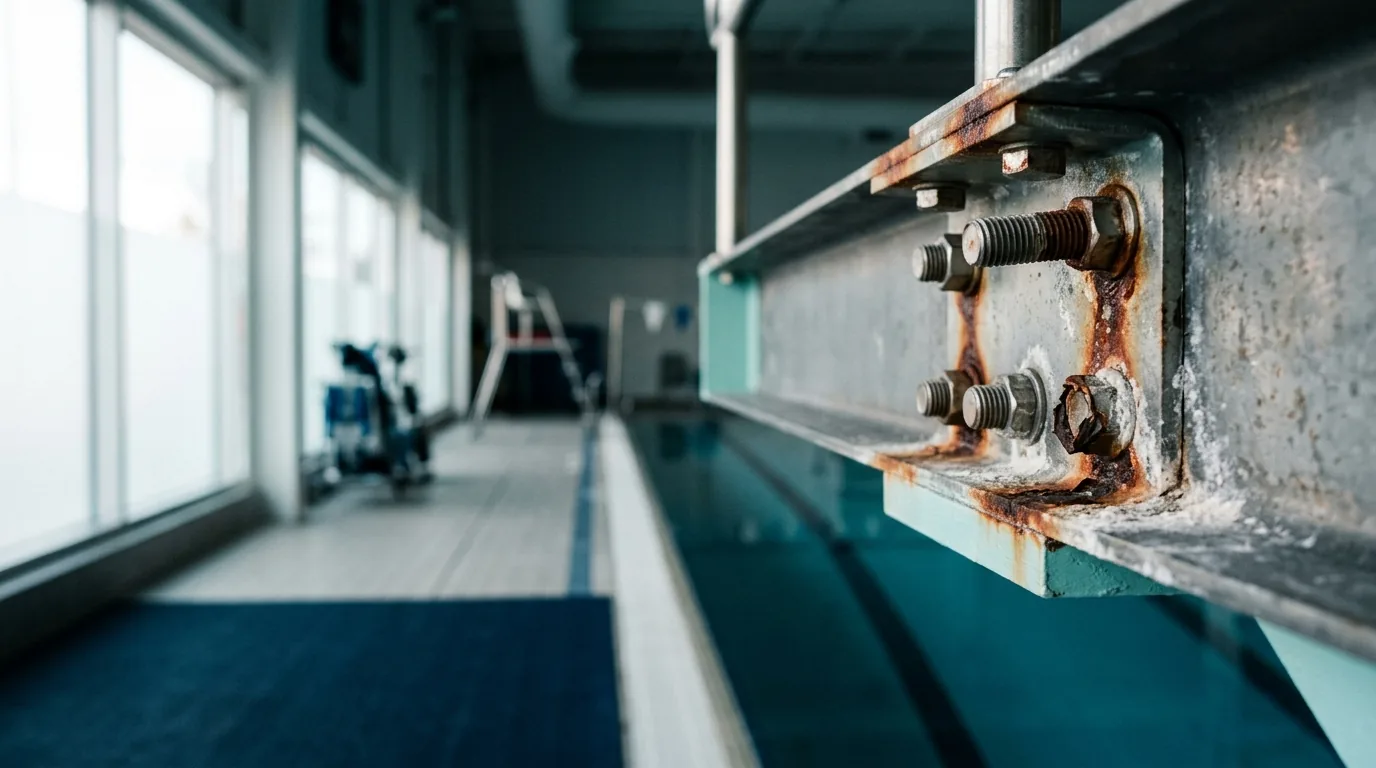
The combination of warm chlorinated water, high humidity, and mechanical tensile stress suddenly makes stainless steel vulnerable to a specific failure mechanism: stress corrosion cracking. And this failure often occurs without any visible warning.
Three reasons why standard RVS fails in swimming pools
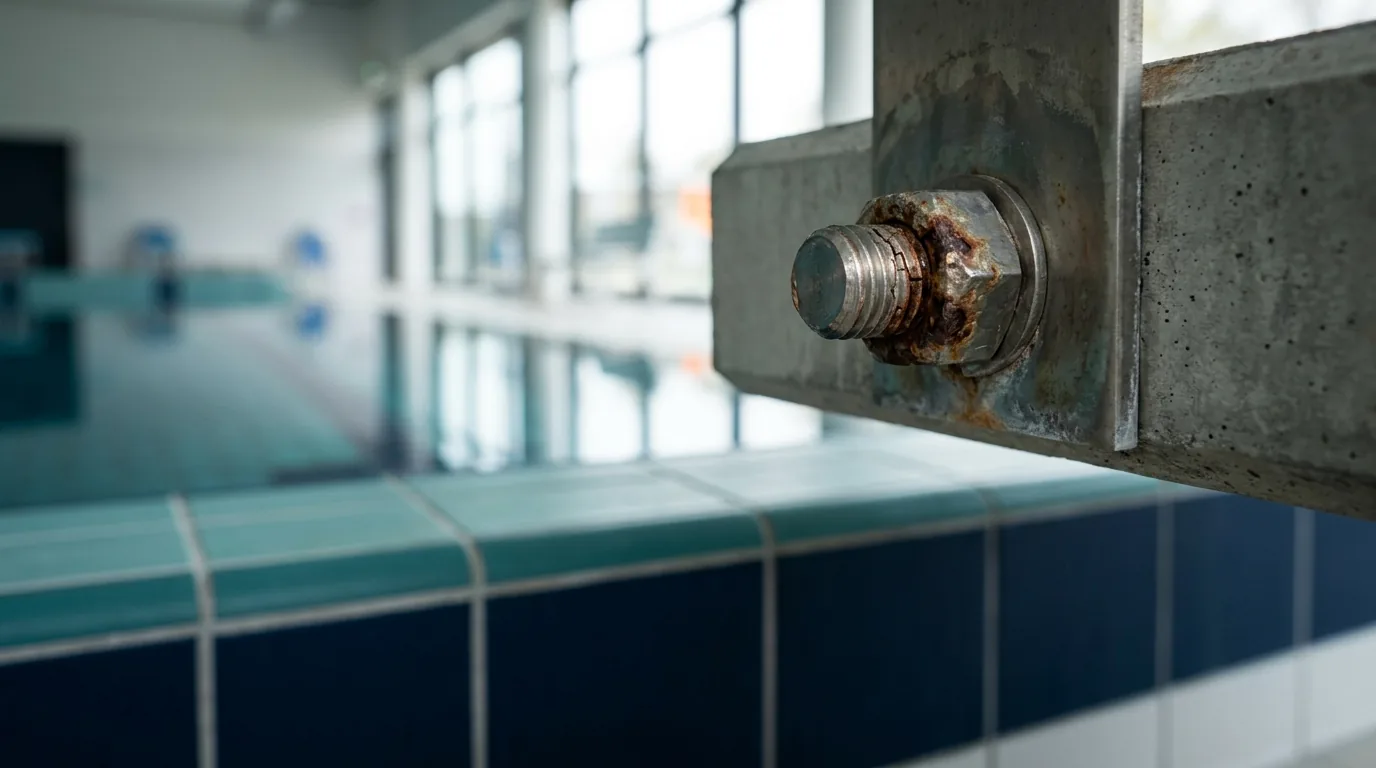
- Chlorides attack the passive oxide layer of A2 (304) and A4 (316) — especially in areas that are poorly rinsed or not rinsed at all.
- Permanent tensile stress on bolts and nuts accelerates crack formation.
- Hidden hot-spots above the waterline (ceilings, suspension structures) experience higher chloride concentrations than underwater areas.
The real danger: brittle fracture without warning
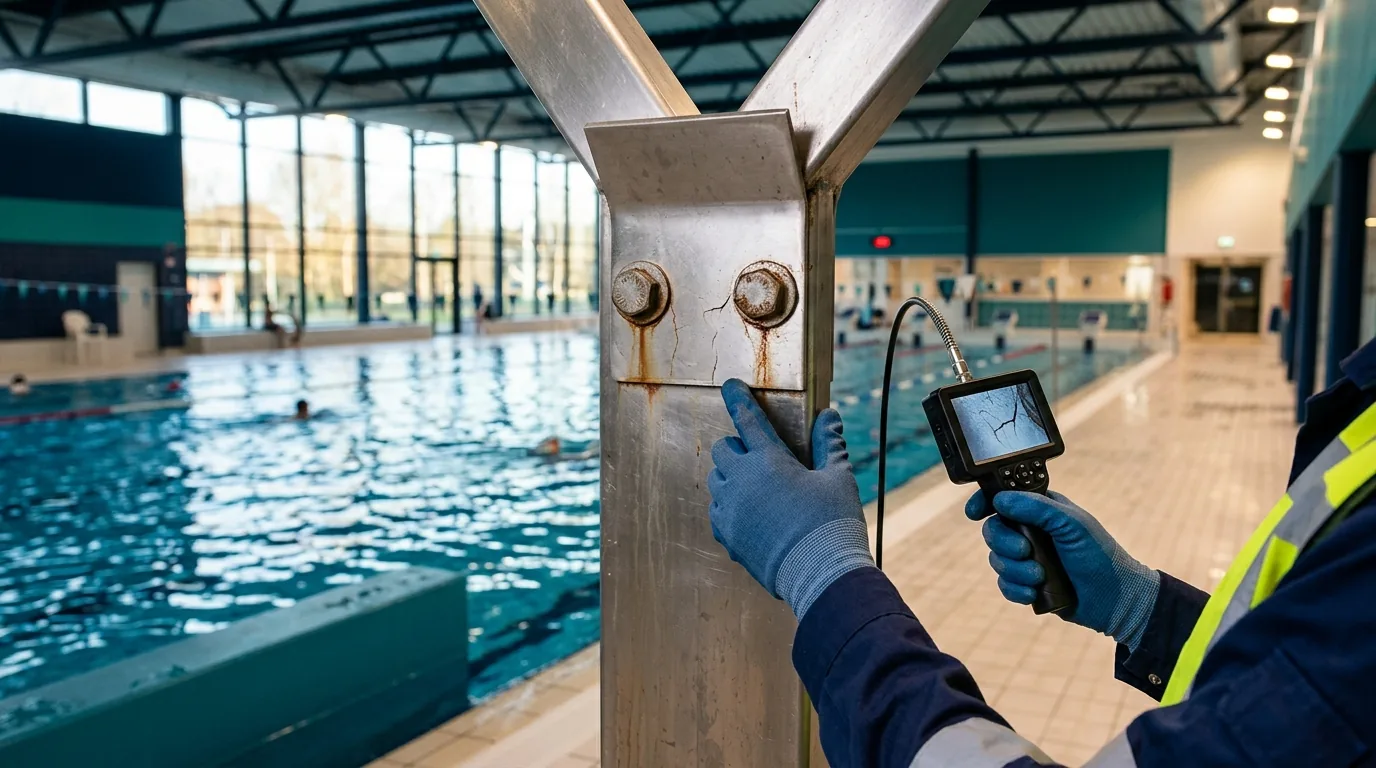
Unlike ordinary rust, you do not see stress corrosion cracking coming. A suspension that still looks perfect after five years can exhibit a brittle fracture in a split second. This is why multiple swimming pool accidents have been reported in the Netherlands where ceilings, railings, and slides collapsed unexpectedly.
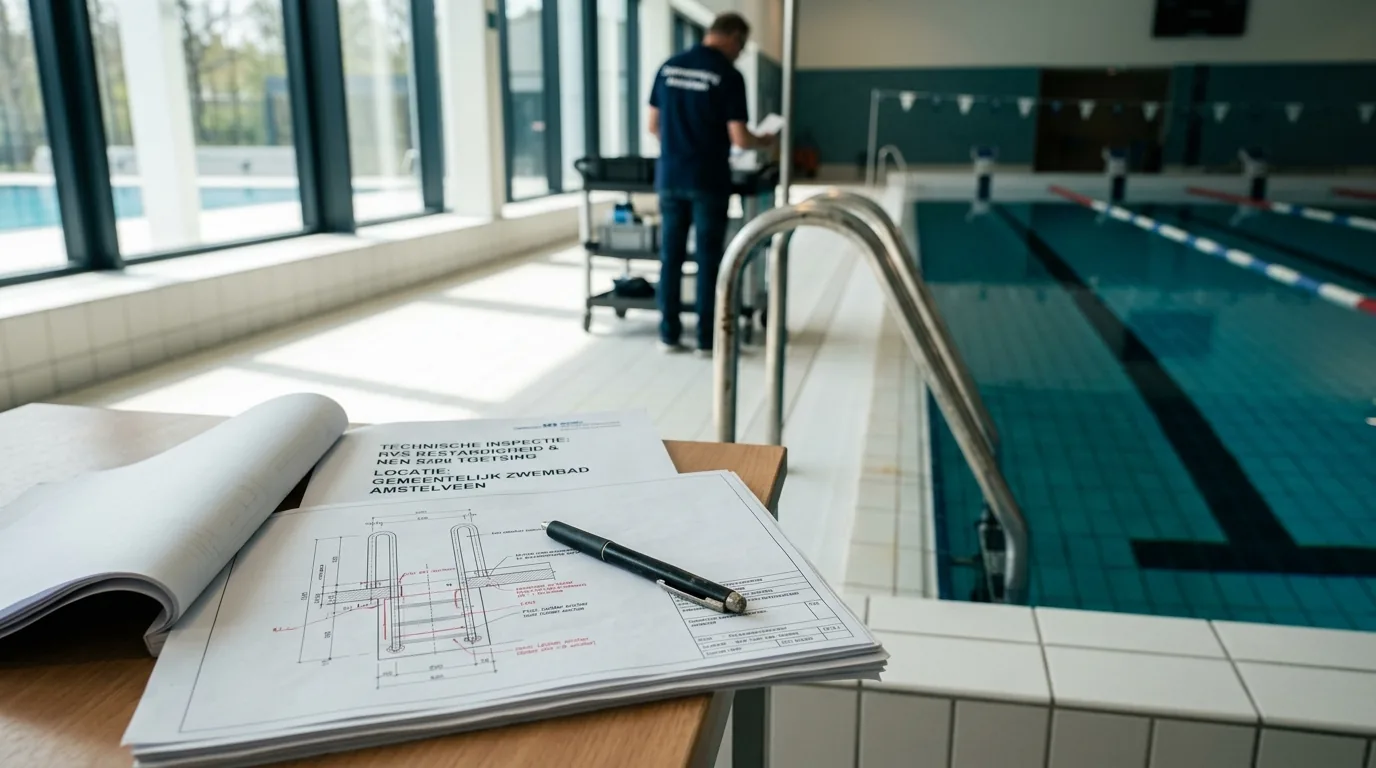
For managers and municipalities, this is not only a safety issue but also a liability risk. Without documented inspections according to NEN 9200, you are in a weak legal position in the event of an incident.