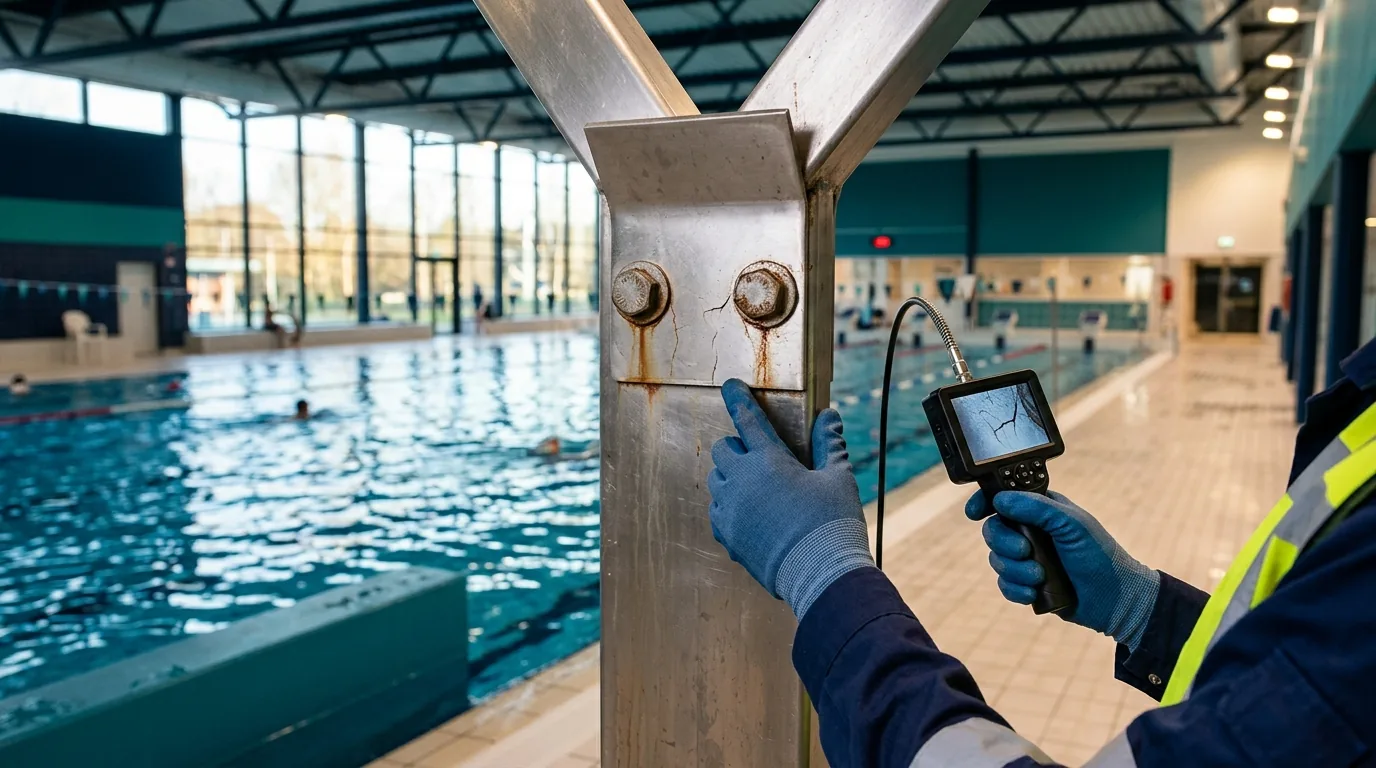
What is stress corrosion and why is it dangerous?
Stress corrosion, or Stress Corrosion Cracking (SCC), is an insidious process that affects stainless steel in swimming pools. This phenomenon is caused by a combination of tensile stress, a corrosive environment containing chlorides, and a specific temperature. Above the waterline, the concentration of chlorine vapors is at its highest, making this a critical zone.
The greatest danger of stress corrosion is that it is often not immediately visible on the surface. While the exterior of a fastener may still look intact, severe internal cracking can already occur in pool RVS. This leads to the sudden and catastrophic failure of suspension systems and load-bearing structures.
Inferior steel grades such as A2 or A4 are particularly susceptible to this type of corrosion in indoor swimming pools. Therefore, NPR 9200 and the Bbl require the use of high-quality alloys such as 1.4529 in critical applications.
The first step: visual inspection of fasteners
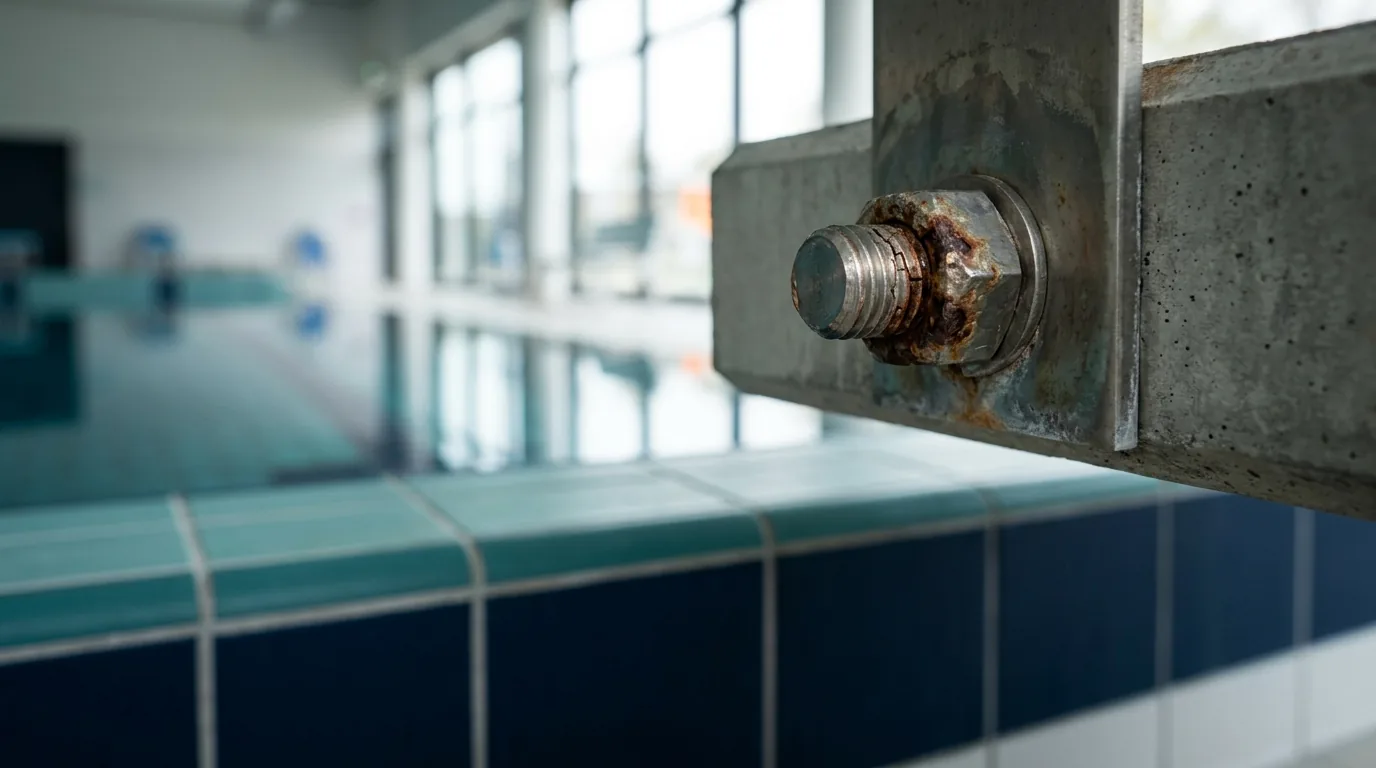
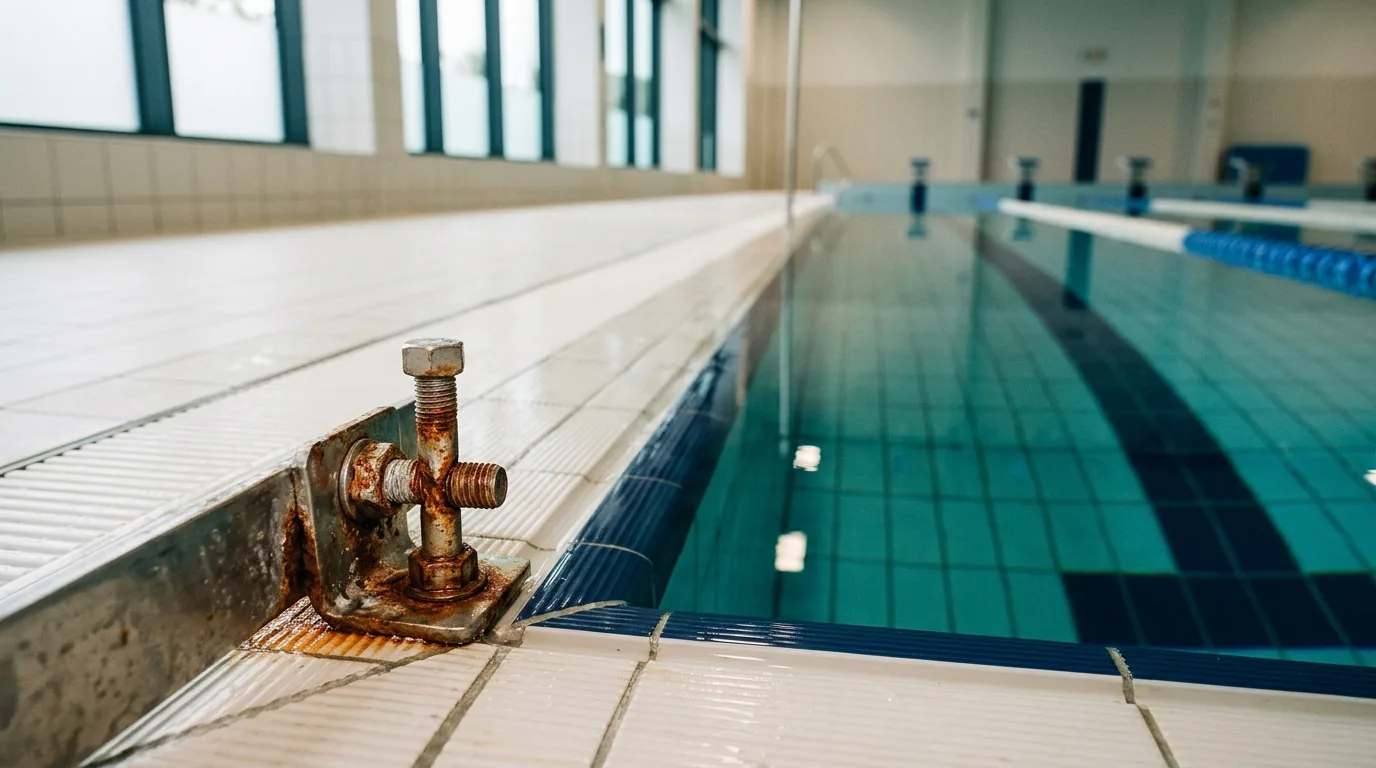
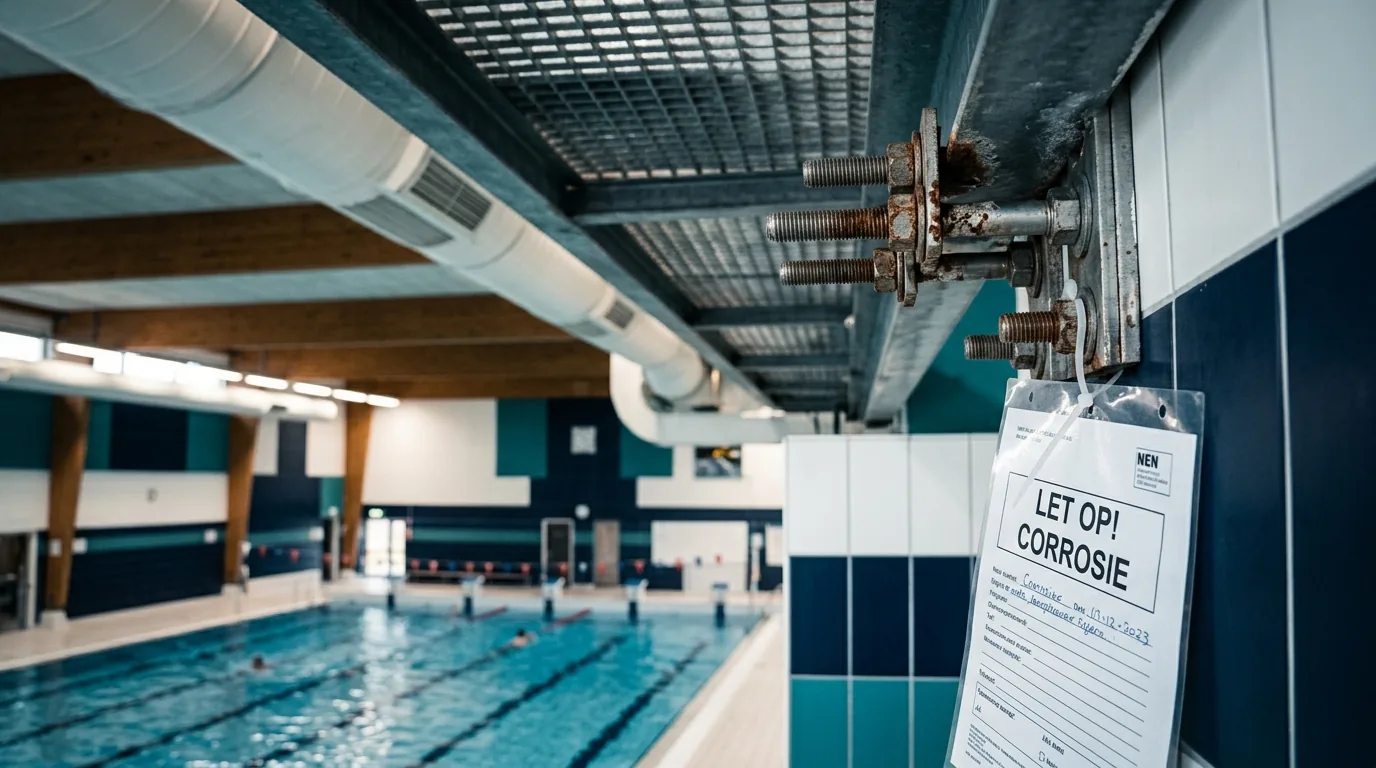
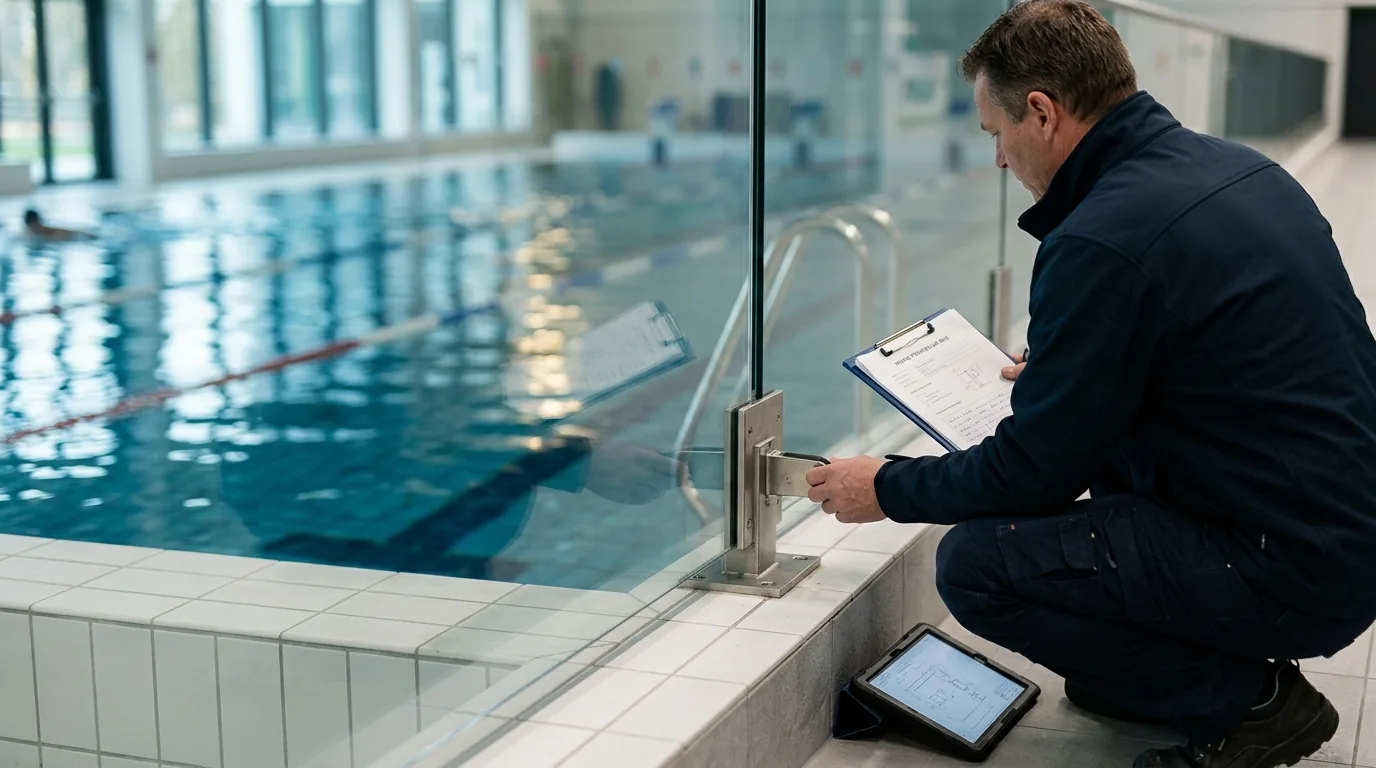
Regular visual inspection of fasteners is the first and most accessible line of defense for pool managers. During this round, all visible load-bearing and non-load-bearing RVS components above the waterline are checked. Pay specific attention to rust formation, brown discoloration, or small hairline cracks around bolts and nuts.
Although rust streaks do not directly indicate stress corrosion on their own, they do point to the degradation of the steel's passive layer. This is a strong indicator that the material cannot withstand the prevailing swimming pool climate. Further analysis is always necessary when such observations are made.
Accurately document any anomaly using photographs and logs. This helps build a maintenance history and is crucial for the mandatory reporting under the Wkb.
Advanced stress corrosion detection
When visual signs are concerning, or during a mandatory periodic pool inspection for SCC, advanced testing methods are required. A commonly used method is dye penetrant inspection. This involves applying a highly colored or fluorescent liquid that seeps into the smallest surface cracks, after which a developer makes the cracks visible.
For cracks located deeper within the material, ultrasonic testing is often used. High-frequency sound waves bounce off internal defects, allowing inspectors to precisely map the depth and severity of the cracking without dismantling the component.
Magnetic particle inspection can also be applied to magnetic steel grades, although this is less suitable for many austenitic RVS grades used in swimming pools. The choice of testing method always depends on the material type and the specific location of the fastener.
Replacement criteria according to NEN 9200
As soon as stress corrosion is detected, immediate intervention is necessary. The NEN 9200 and NPR 9200 guidelines are clear about the steps to take upon material rejection. Components with active cracking in load-bearing structures must be taken out of service and replaced immediately.
Replacement may only be carried out using materials proven to withstand the corrosive swimming pool environment. To eliminate future risks, exclusively use fasteners made from materials such as 1.4529, as supplied by PoolFIX.
Additionally, the application of a high-quality coating, such as ACRATON® Dolphin, can help extend the service life of surrounding structural parts and prevent further chloride attack.
- Replace immediately upon detection of SCC cracks.
- Exclusively use high-alloy RVS such as 1.4529 for load-bearing parts.
- Record all inspection and replacement actions in the building dossier.