Chlorine versus chloride — two different attackers
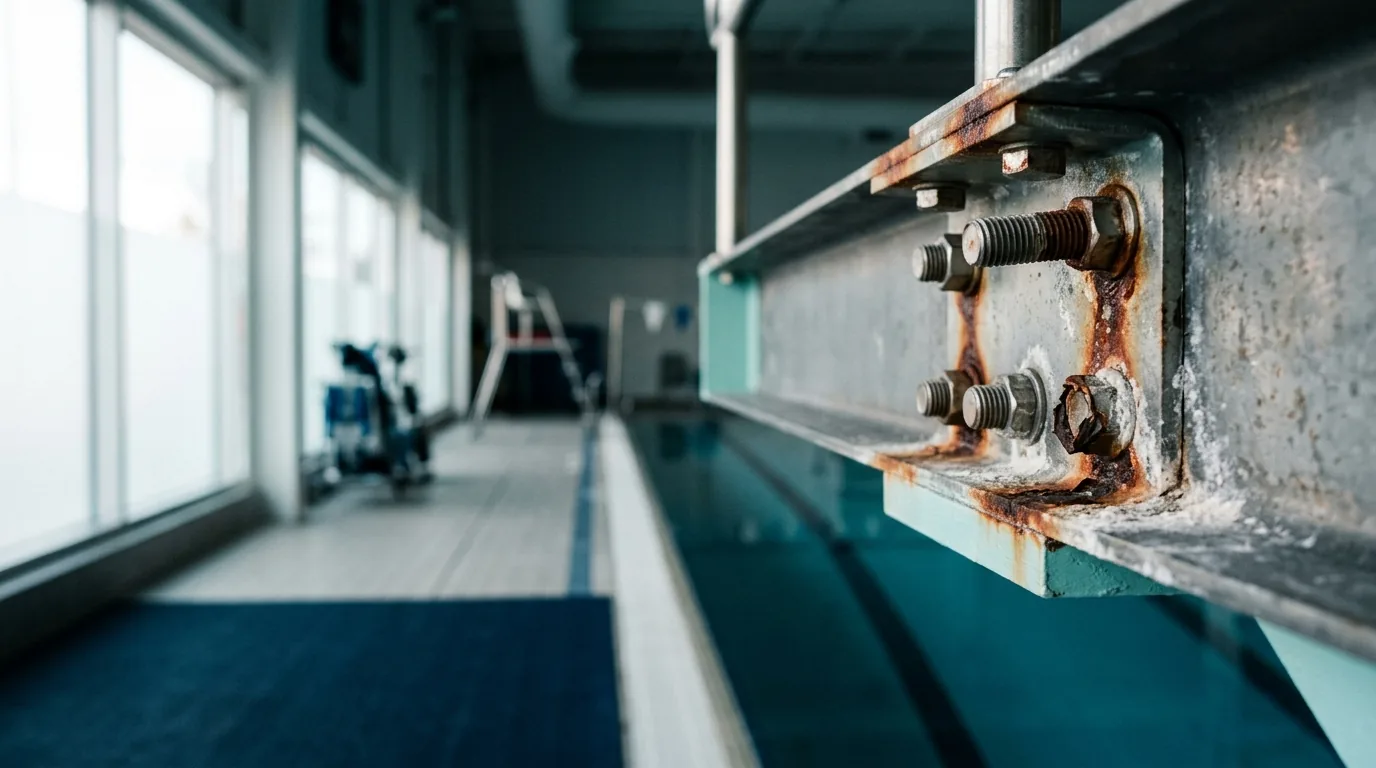
Colloquially, 'chlorine' and 'chloride' are used interchangeably, but for your fastening materials, the difference is crucial. Chlorine (Cl₂) is the disinfectant you dose. Chloride (Cl⁻) is what remains in the water — and that is the actual attacker on your RVS.
The more that is dosed, the more chloride accumulates in the water and the air above it. In intensively used swimming pools, we see chloride concentrations of 250-500 mg/l — well above what A2-RVS can structurally handle.
The four failure mechanisms caused by chloride
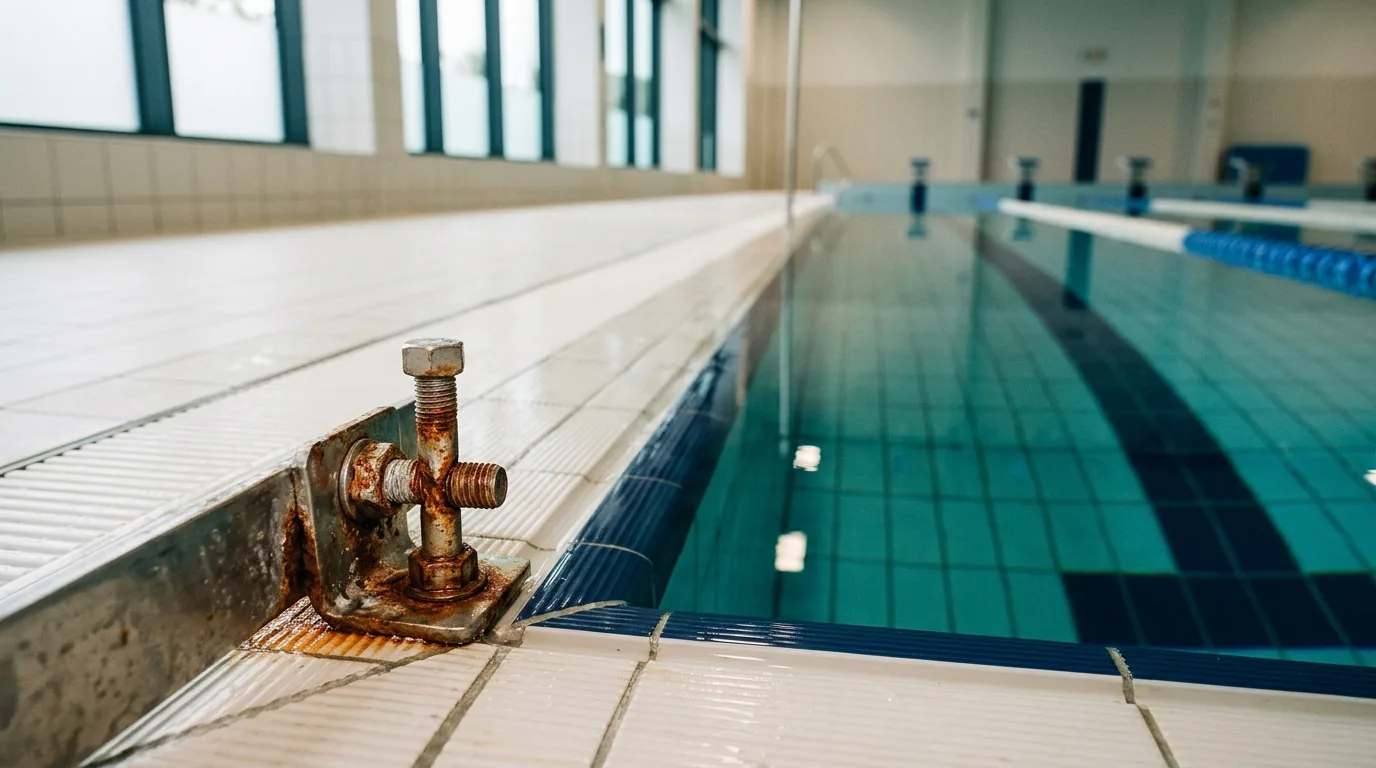
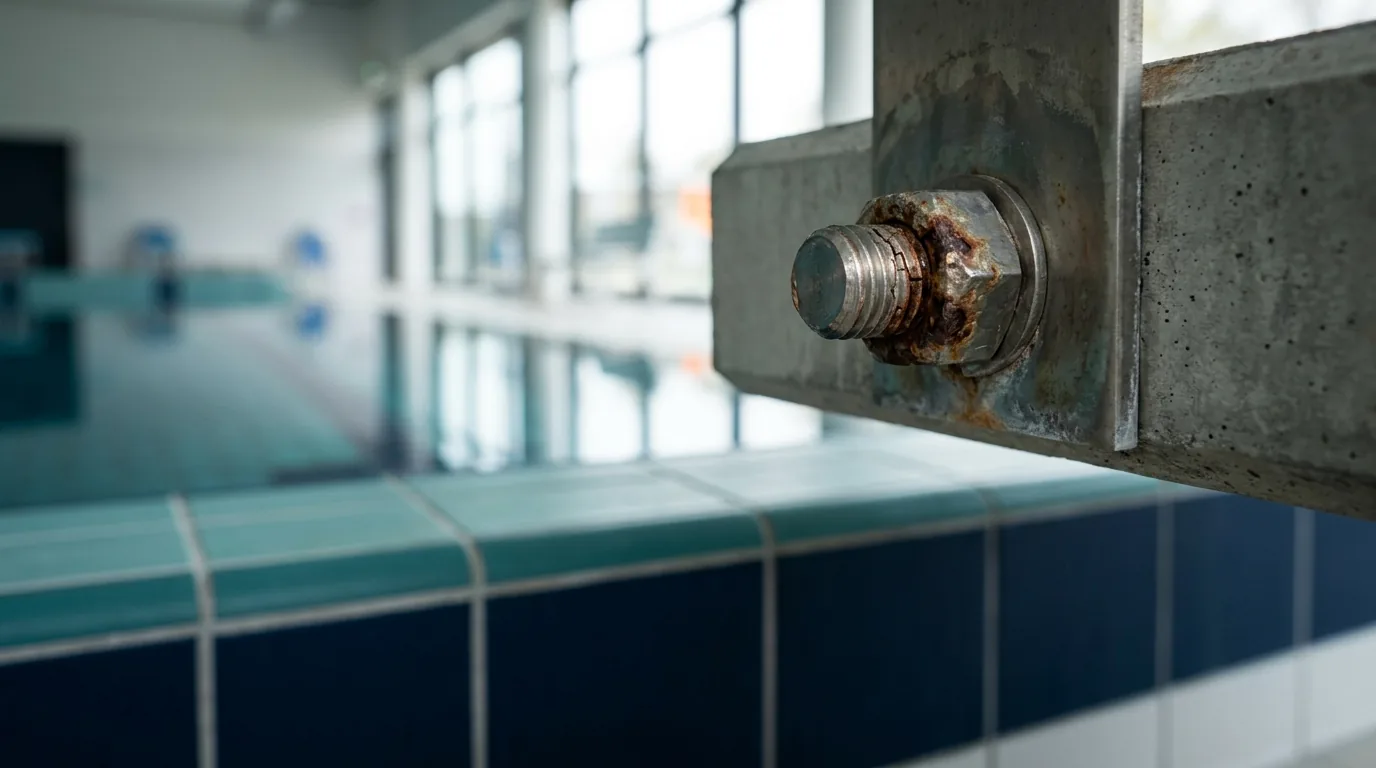
- Pitting corrosion: small pits in the surface that penetrate deeply.
- Crevice corrosion: in crevices and under seals where no oxygen reaches.
- Stress corrosion cracking: crack formation under tensile stress (see separate blog).
- Galvanic corrosion: upon contact between different metals (RVS-steel-copper).
Why 'A4' is not the same as 'safe'
Many installers assume that A4 (316/316L) is the solution. In most industrial environments, this is true — A4 contains molybdenum and is therefore more resistant to chlorides. But in a swimming pool, even 316L is not sufficient. Only from 1.4529 (a super-austenitic RVS) do you get a reliable buffer for decades of swimming pool conditions.