The legal framework
There is no law in the Netherlands that explicitly states 'RVS is banned in swimming pools'. However, there are standards and duty of care provisions that have the same effect in practice:
- Building Decree 2012 — duty of care for structural safety.
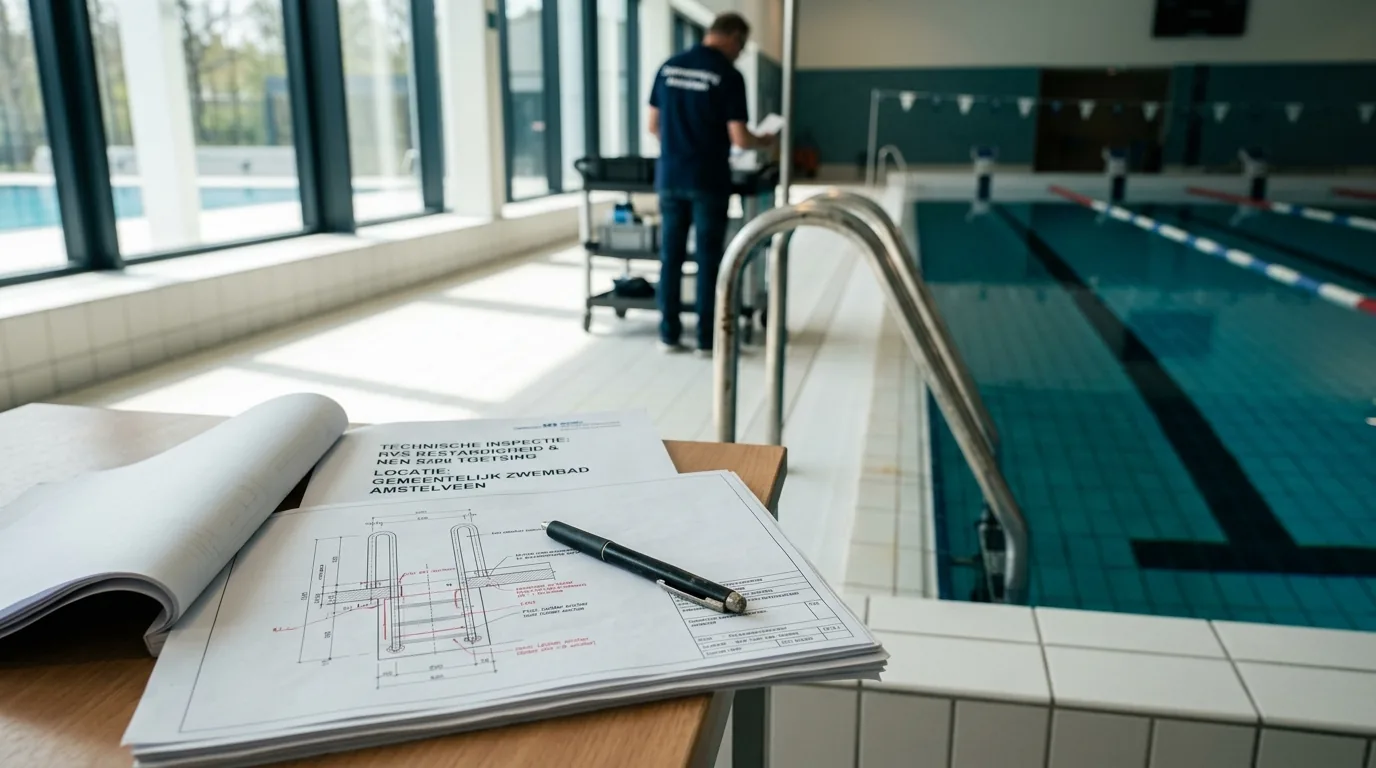
- NEN 9200:2025 — specific requirements for swimming pool structures and fastenings.
- Working Conditions Act — employers must guarantee a safe working environment.
What exactly does NEN 9200:2025 state?
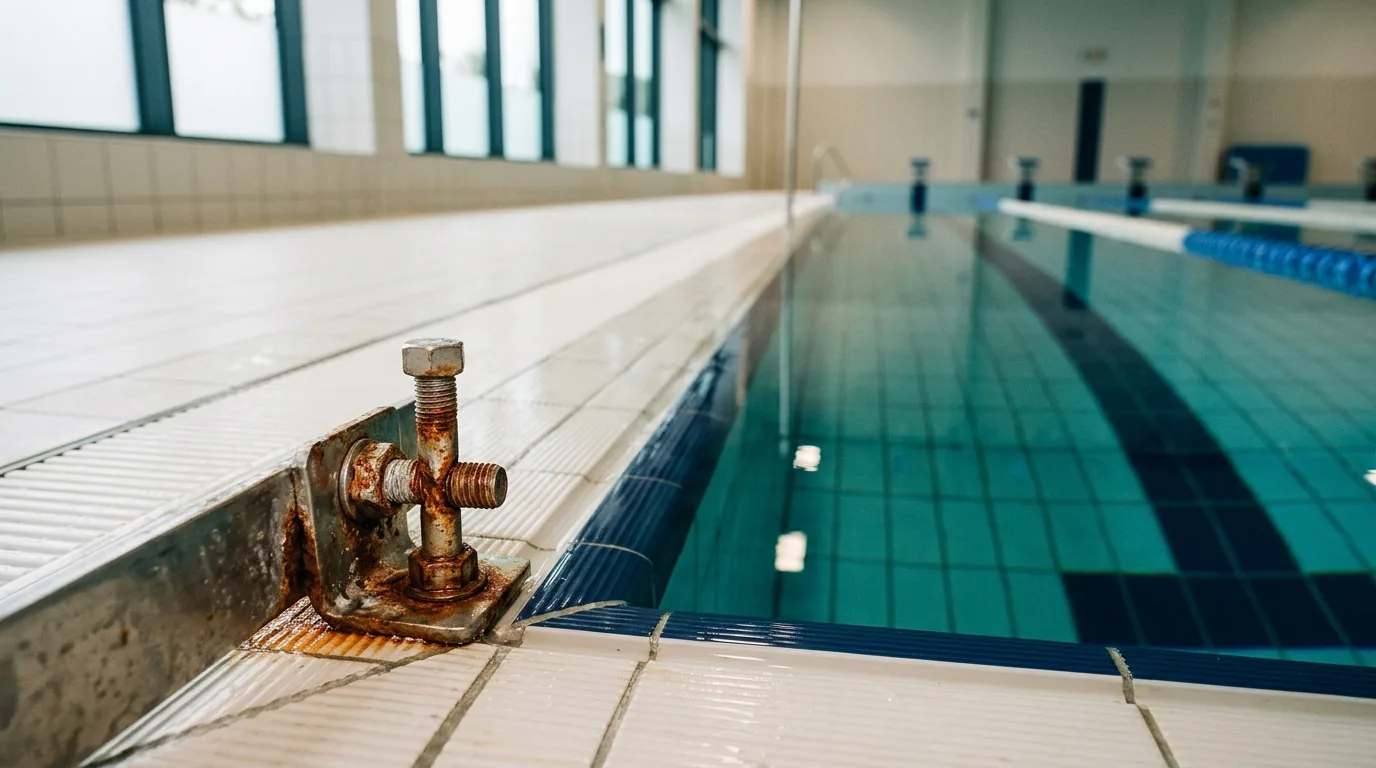
The standard requires a substantiated choice of material based on the expected environment. For indoor swimming pool climates with chloride exposure, this means in practice: A2 and A4 RVS are generally insufficient for permanently loaded connections below the waterline or in splash zones.
The standard outlines an assessment procedure that allows you to demonstrate which material does comply on a per-location basis. PoolFIX 1.4529 meets these requirements for virtually all swimming pool applications.
What does this mean for you as a facility manager?
- You do not have to replace everything, but you must be able to demonstrate that the current RVS fastenings are safe.
- In case of doubt or following incidents, you are formally obligated to carry out a risk analysis.
- Documentation is not an option but a requirement — in the event of an accident without a proper file, your legal position is weak.