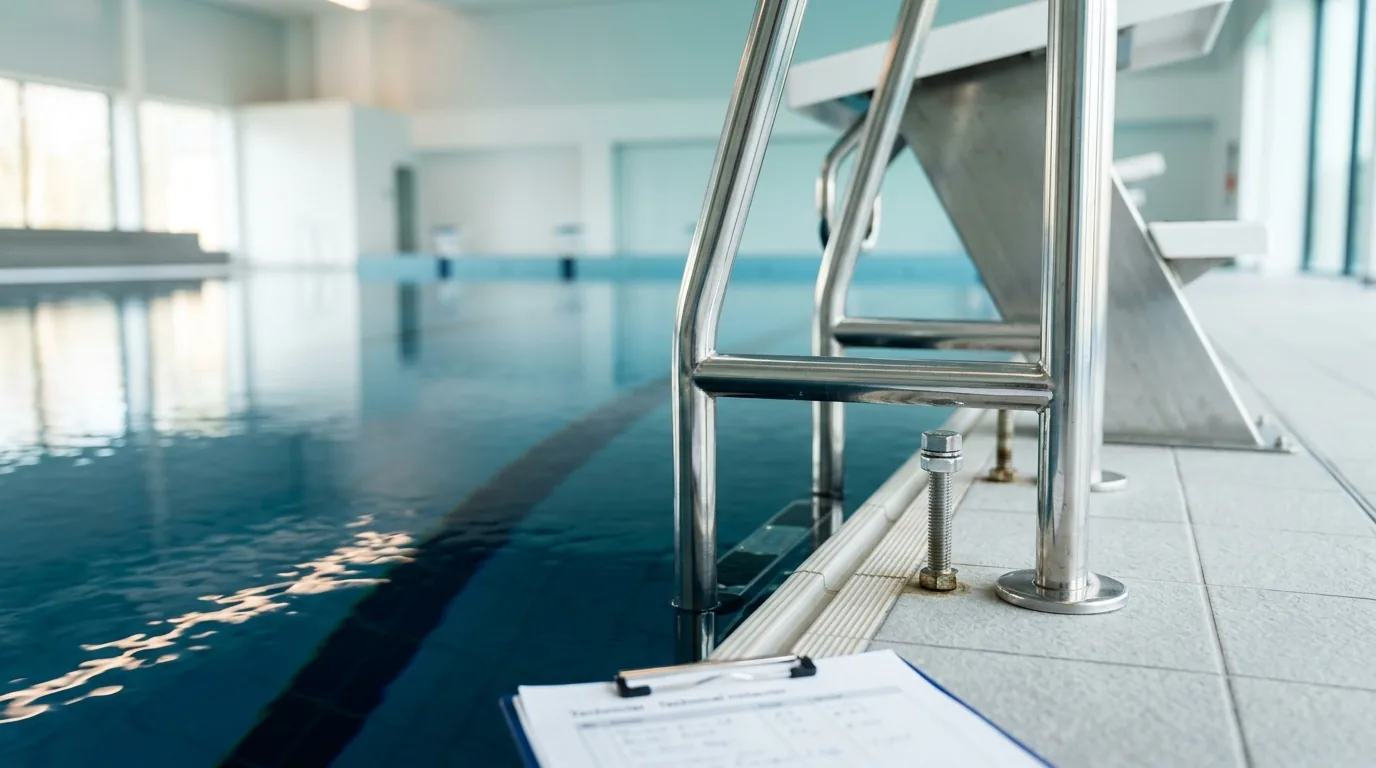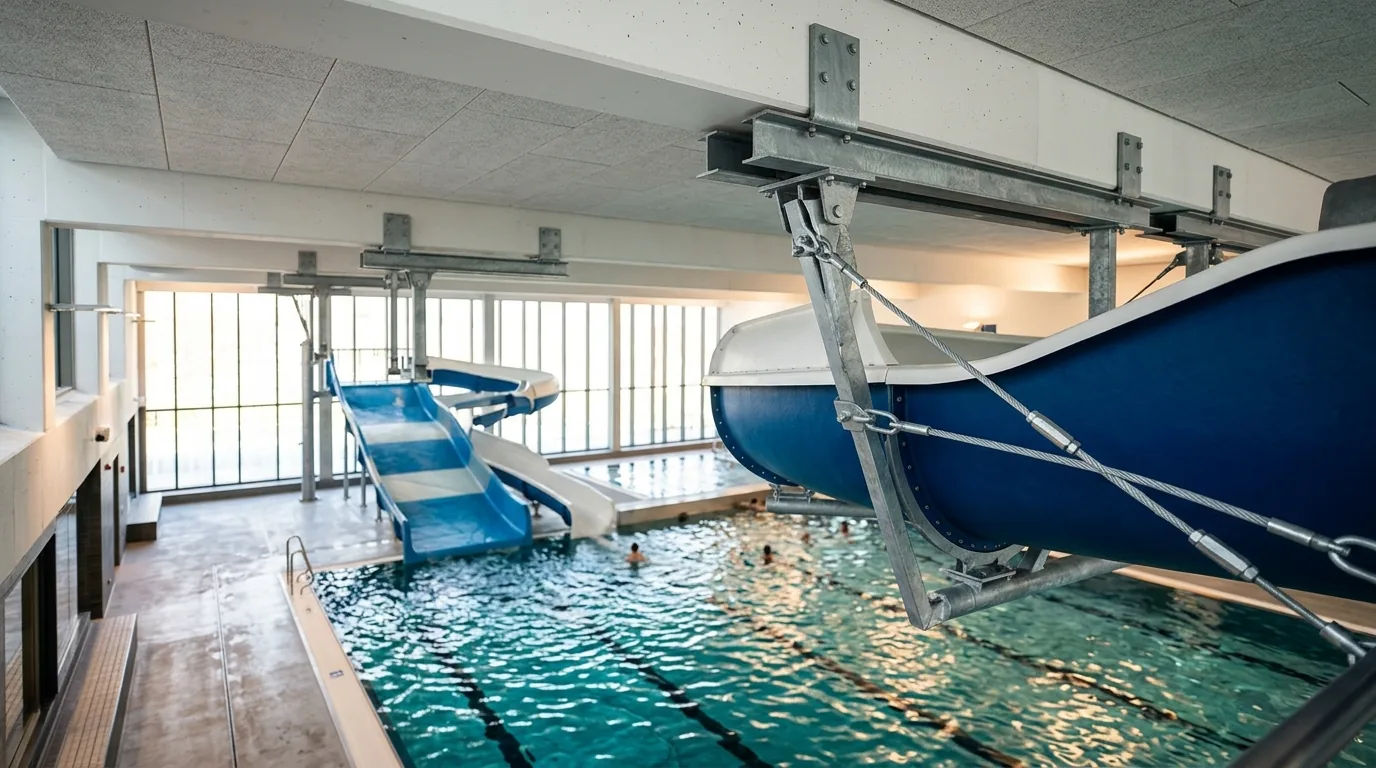
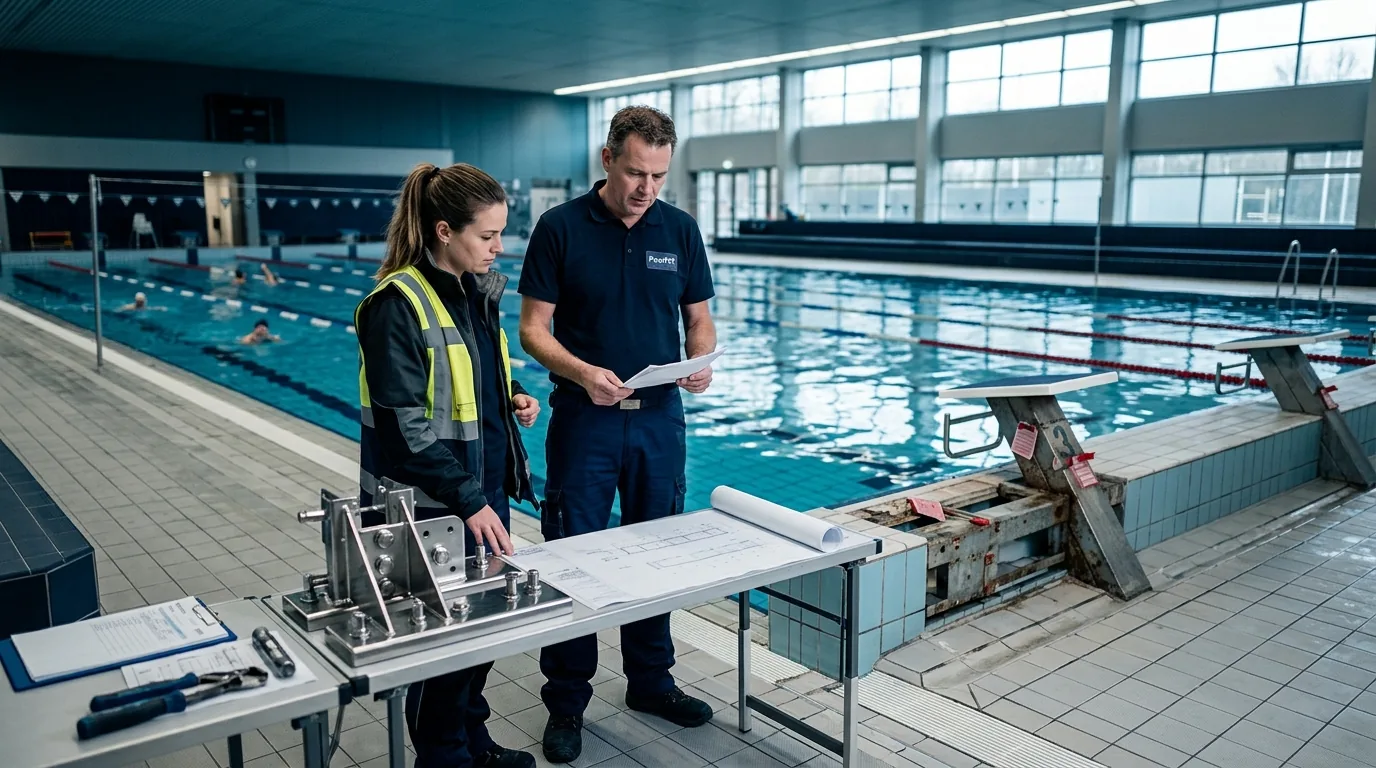
The situation: municipal indoor pool, built in 1992
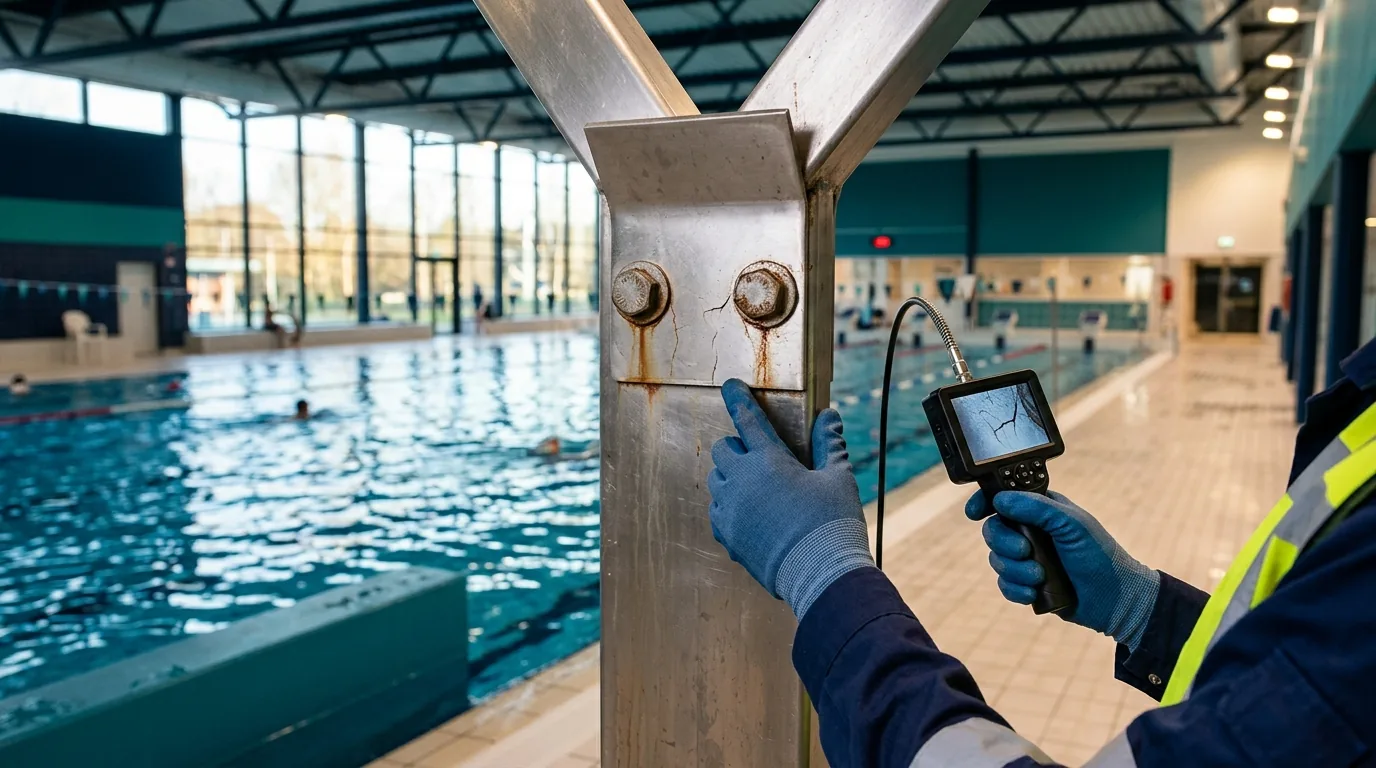
A municipal indoor swimming pool in the Netherlands (anonymous at the client's request) received its first failing inspection in 2024. Conclusions: 47 pending action points, no up-to-date risk dossier, RVS fasteners of unknown age at critical suspension points.
The municipality was given 12 months to resolve the shortcomings, otherwise facing a potential partial closure.
Step 1: Digitization of existing documentation (weeks 1-2)
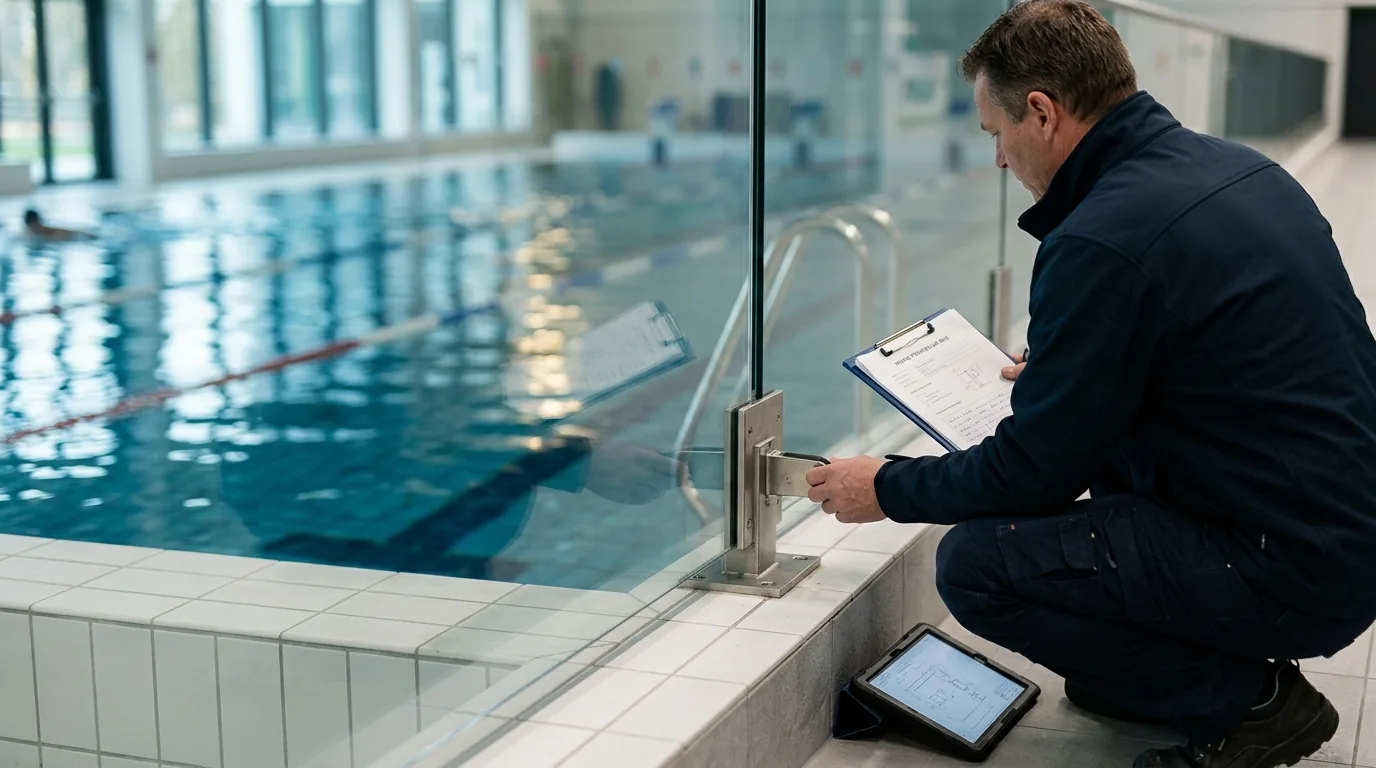
All inspection reports, photos, and handwritten notes were loaded into the PoolFIX platform within 2 weeks. For the first time, this provided a single centralized overview — which was the root cause of the problem, rather than the material itself.
Step 2: Risk analysis + classification (weeks 2-3)
Each connection was classified into A/B/C risk categories (see separate blog post). Result:
- 12 Class A connections — replaced immediately with 1.4529.
- 23 Class B connections — to be replaced within 6 months, schedule finalized.
- 14 Class C connections — monitor with bi-annual visual inspection.
Step 3: Execution and documentation (weeks 4-6)
Class A connections were replaced during a 4-day closure in a quiet period. Every new connection was photographed, batch numbers recorded, and linked to the central dossier.
At the re-inspection in week 6, 100% of the pending Class A and B points were demonstrably resolved or scheduled. The swimming pool was fully NEN 9200 compliant.
Results in numbers
- Lead time from rejection to compliance: 6 weeks (instead of 12 months).
- Costs 35% lower than the initial 'replace everything' quotation.
- Compliance Check score from 32 → 91 in 8 weeks.
- 2026 insurance premium reduced due to the existence of an active dossier.