Investigating nonius connections in swimming-pool ceilings
A technical investigation of a suspended swimming-pool ceiling must look beyond the supporting profiles. The small locking parts in a nonius connection determine whether the upper and lower hangers remain mechanically connected.
In practice, clips can be difficult to see, absent from traceability records or installed as a single locking point. In a warm, humid and chloride-containing pool atmosphere, this is not a minor detail: material selection, corrosion protection, clip quantity and installation must be assessed together.
Why one clip is not a safe final solution
A single clip provides one locking point. If it is missing, incorrectly inserted, deformed or removed during work, the connection has no second mechanical lock.
For a ceiling above visitors and staff, the assessment must therefore go beyond whether one clip currently holds the parts together. The connection must suit the specified suspension system, load and ceiling safety concept.
Why two clips are the starting point
Two correctly positioned clips lock the overlapping nonius parts at two points. This reduces the likelihood that rotation, accidental removal or one local defect causes the connection to lose all locking.
Double locking does not replace structural design or installation instructions. It must be used as part of the complete, project-specific nonius system and at the positions specified by the supplier or responsible designer.
- Use two matching clips per nonius connection where required by the PoolFIX system.
- Confirm that both clips pass fully through the intended holes.
- Replace improvised wire, mixed clip types and visibly deformed locking parts.
Black clips: an identification signal, not a cause of corrosion
A black clip does not automatically cause corrosion. Colour alone also does not prove the steel grade, coating thickness or tested performance of an unknown product.
Colour is nevertheless important for identification: a black nonius clip is not a silver-grey PoolFIX clip and therefore cannot be identified as a C5-M-tested PoolFIX component. Treat it as a product of unknown origin until documentation proves otherwise.
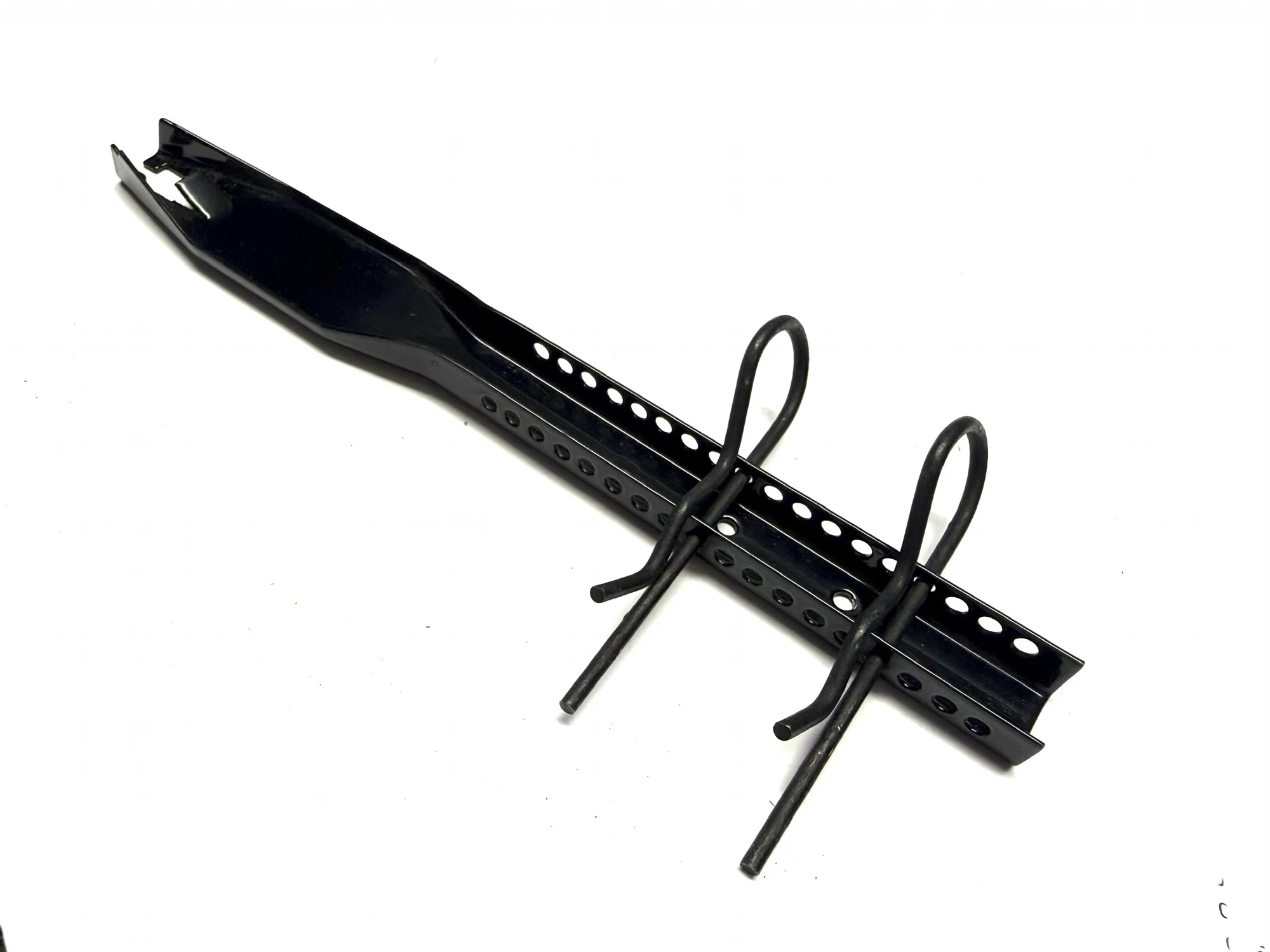
PoolFIX nonius clips are silver-grey — never black
The PoolFIX nonius clip has an identifiable silver-grey finish. This visual identity supports inspection, but must always be combined with traceable origin and project-specific suitability.
If a clip is presented as PoolFIX while it is black, the product identification is incorrect. Record the discrepancy and have the connection assessed before the ceiling is released.
What does C5-M mean?
C5-M is the familiar designation from the earlier ISO 12944 classification for very high corrosivity in marine environments. More recent editions use designations including C5 and CX. The term describes the severity of the corrosive exposure against which a coating system is tested.
For the PoolFIX nonius clip, C5-M refers to the clip's tested corrosion protection. It is not independent structural approval for every ceiling and does not replace assessment of load, detailing, installation and inspectability.
Practical evidence: corrosion often starts out of sight
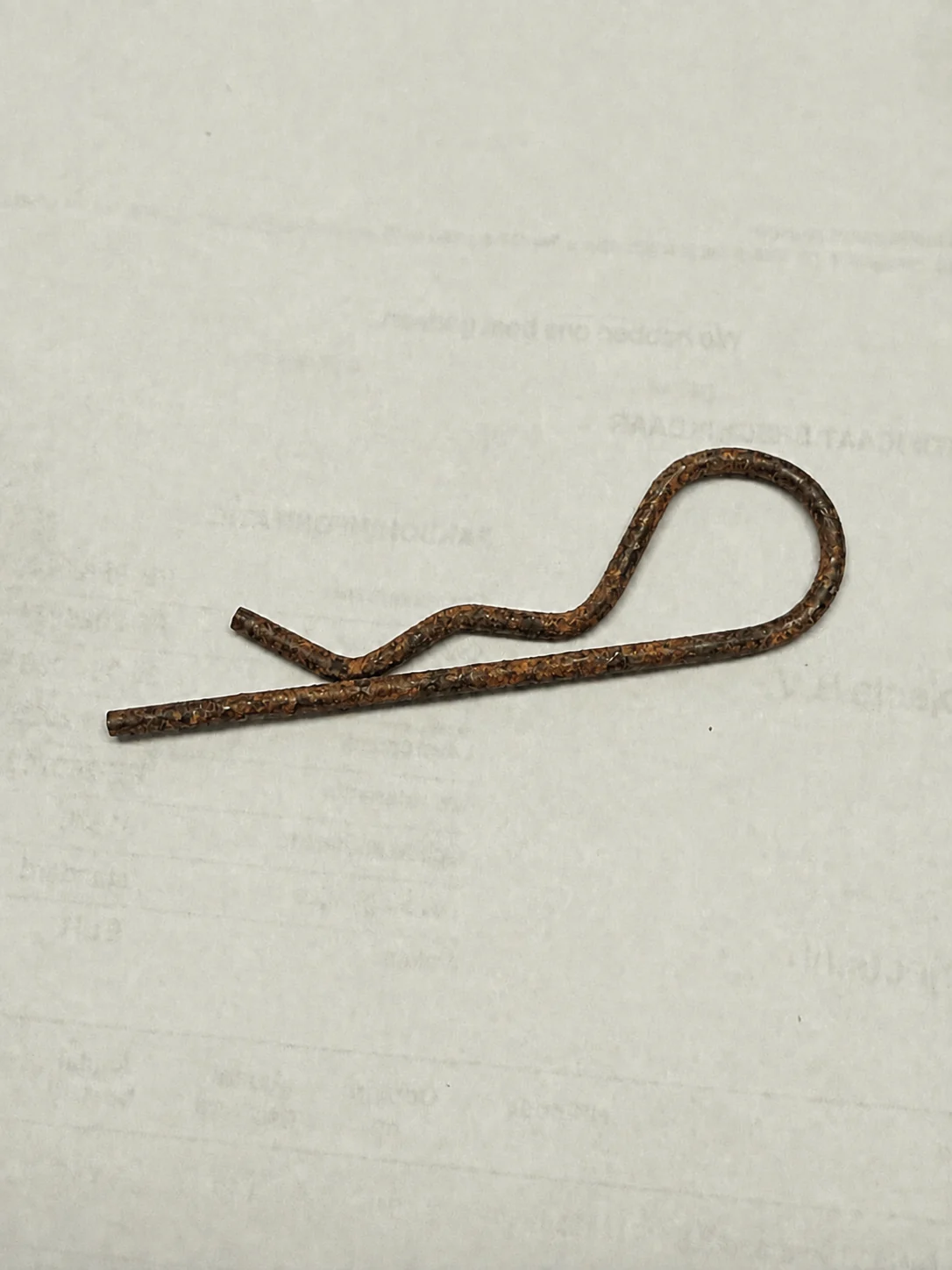
The deteriorated clip in the image at the top shows how severely a small locking part can degrade in practice. Above a swimming pool, these parts can remain hidden behind ceiling panels for years.
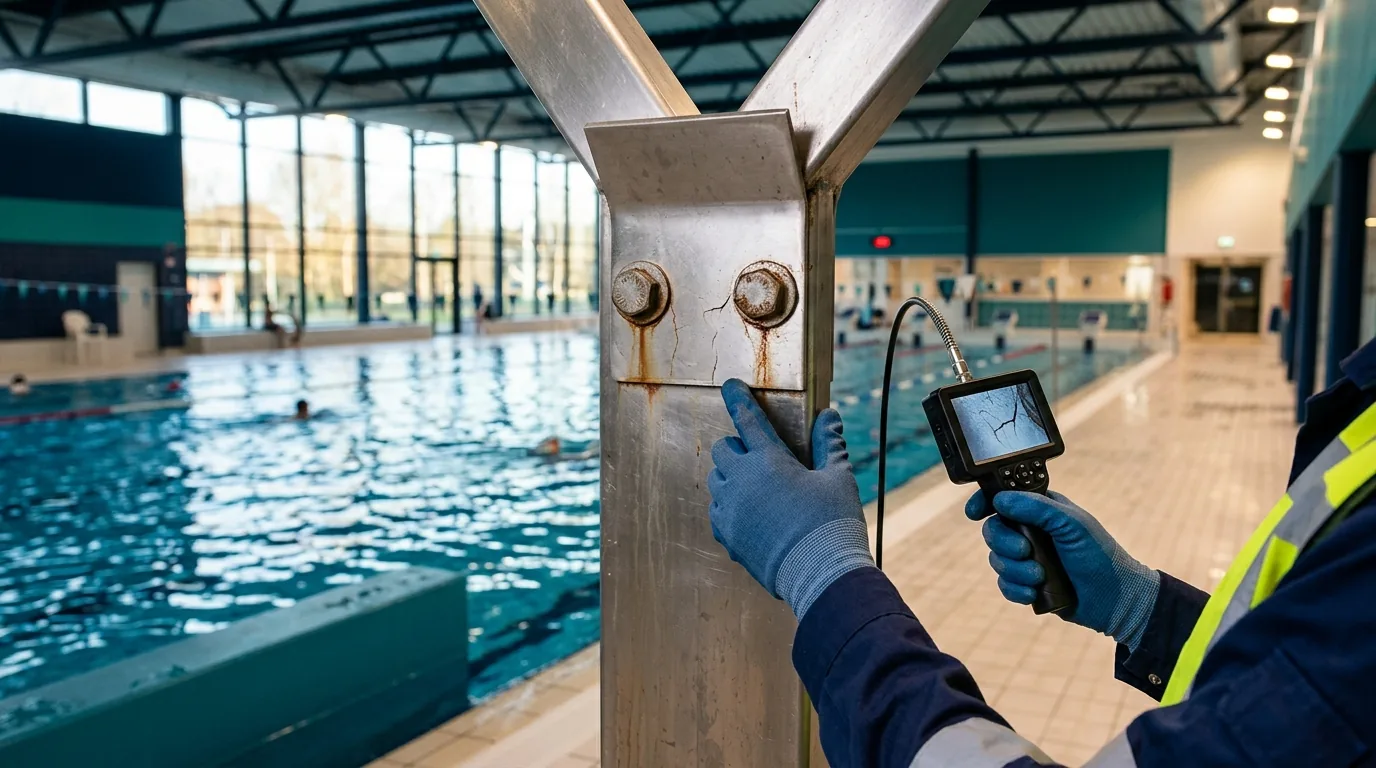
Do not wait for rust staining on the visible face of the ceiling. Open representative inspection zones and assess hard-to-reach connections, edges and areas affected by condensation or limited airflow.
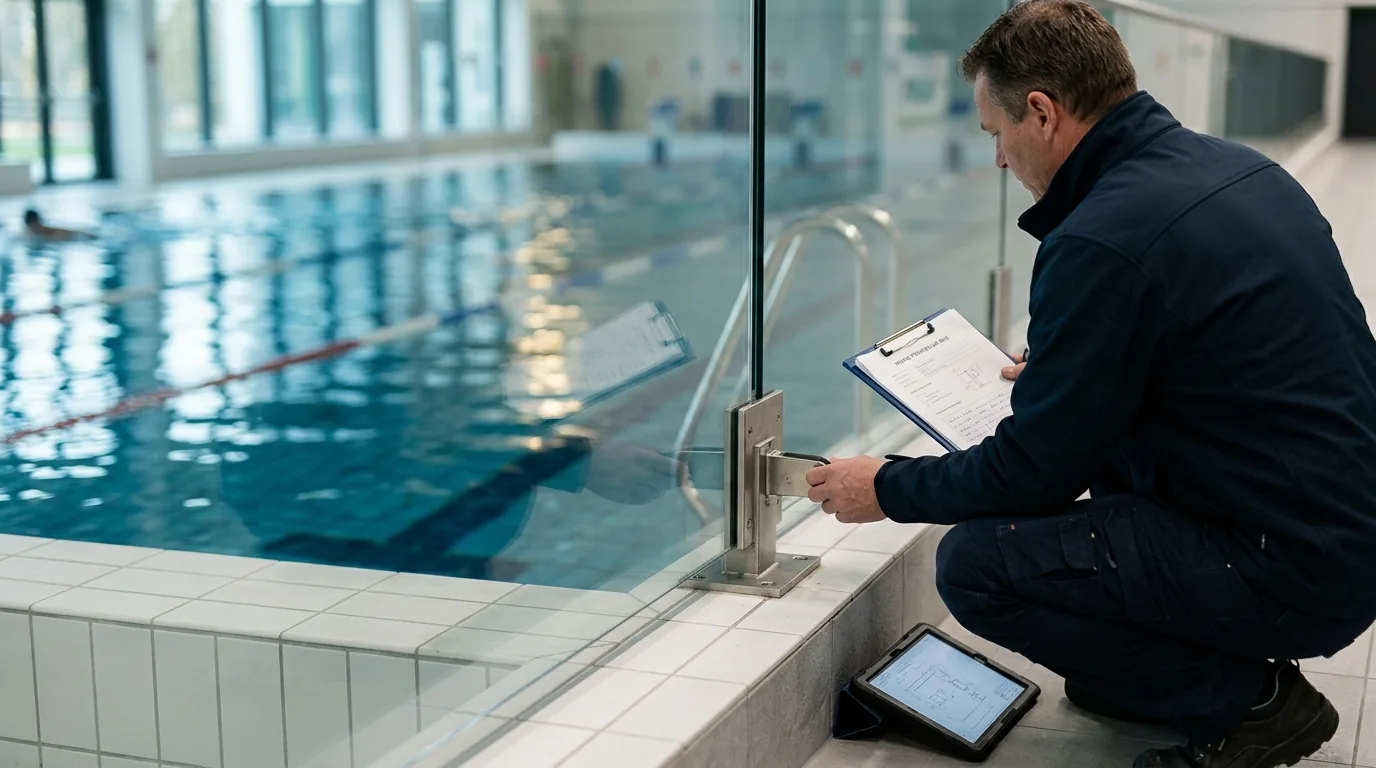
What should an existing swimming-pool ceiling inspection cover?
A useful inspection records at least the following points for each representative zone:
- The number and position of clips in each nonius connection.
- Colour, type, dimensions, deformation and visible deterioration.
- Sufficient overlap between upper and lower hangers and correct hole alignment.
- Origin, product documentation, delivery batch and installation or replacement date.
- Condensation, leakage, contamination and other local conditions that can accelerate deterioration.
What should you do when you find one clip or a black clip?
Mark the location, photograph the condition and determine whether temporary safety measures are needed. Do not blindly replace one visible part without checking the rest of the connection and comparable suspension points.
Prepare a repair plan that records the correct number of clips, the silver-grey PoolFIX version, the installation method and the follow-up inspection. If load capacity or stability is uncertain, the responsible structural engineer must assess it.
Document the product, installation and traceability
A safe ceiling suspension must be demonstrable. State in the specification and work plan that two matching clips are used per nonius connection and that the specified clip is identifiable as silver-grey. Record discrepancies, replacements and inspection results in the project file.
PoolFIX can support product specification and assessment of existing situations. The decision is then based not on colour or a standalone product claim, but on a verifiable combination of system, test basis, installation and documentation.