Safe nonius clips for swimming-pool ceilings: why two clips matter
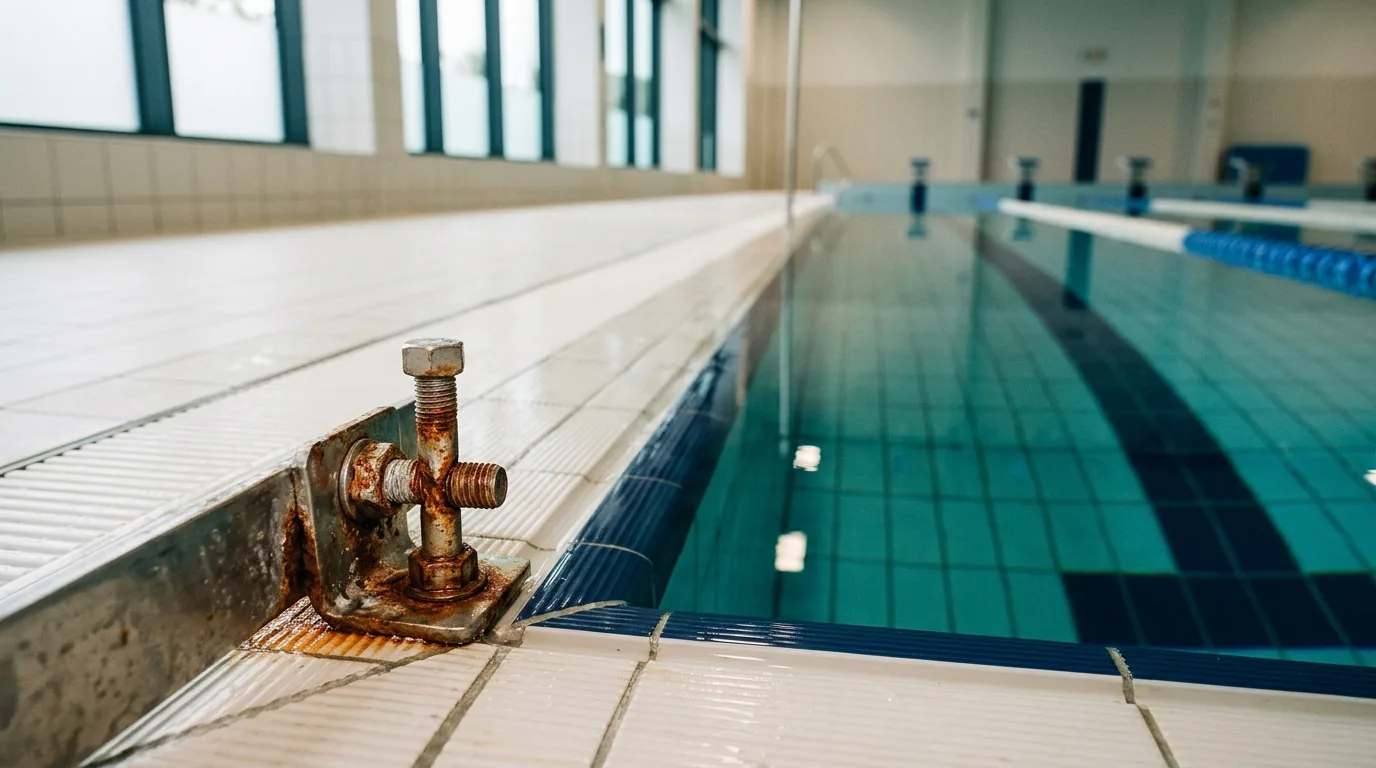
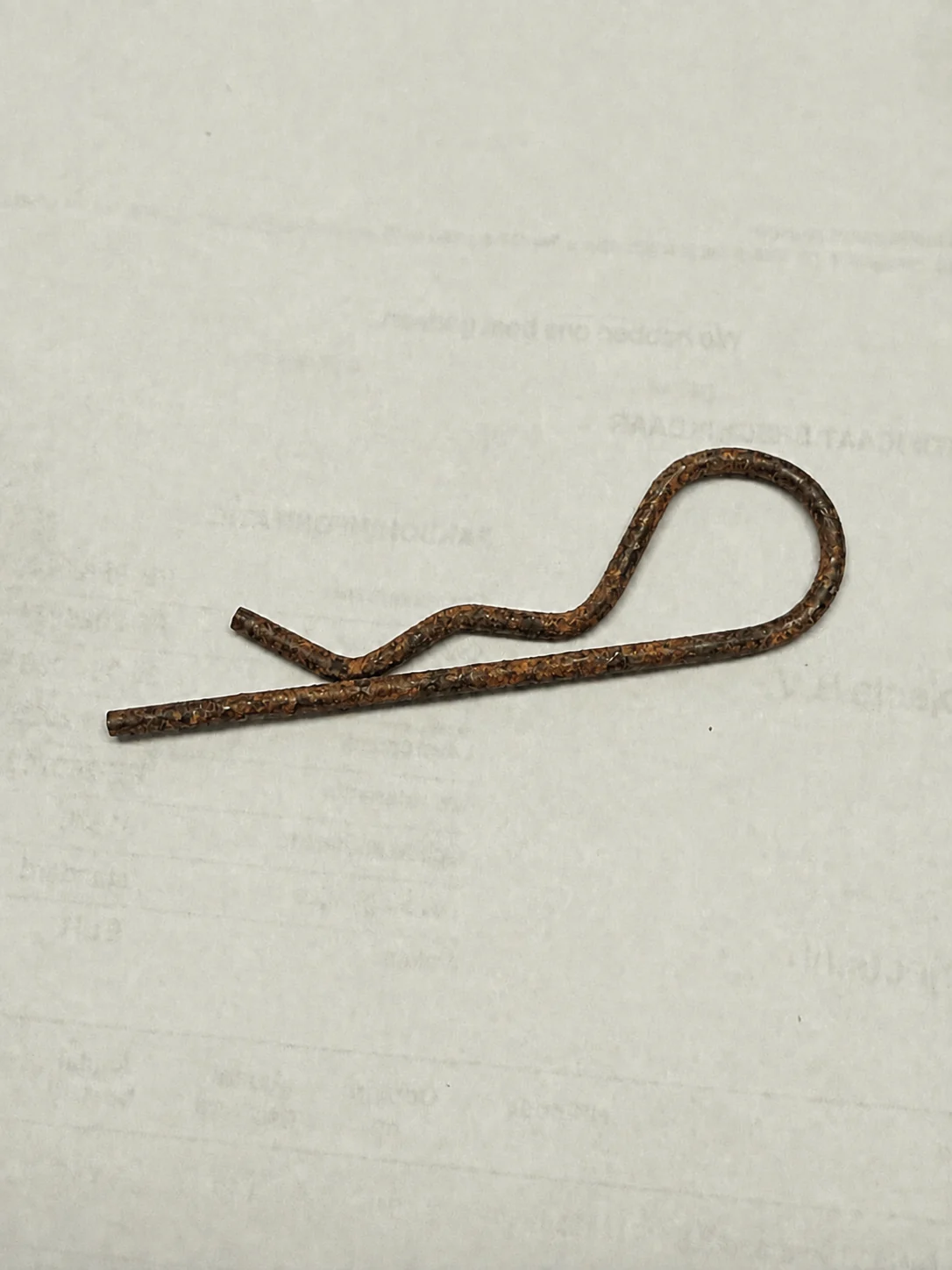
A single or black nonius clip is not an identifiable PoolFIX solution. Learn why swimming-pool ceilings require two silver-grey, C5-M-tested PoolFIX clips per connection.
Technical articles on stainless-steel risks, NEN 9200, safe alternatives and real-world cases. For operators, installers and contractors.

A single or black nonius clip is not an identifiable PoolFIX solution. Learn why swimming-pool ceilings require two silver-grey, C5-M-tested PoolFIX clips per connection.

Learn from historical RVS incidents in Dutch swimming pools, such as collapsing ceilings due to SCC. Discover the causes and how to ensure safety in accordance with the NEN 9200 (Dutch standard — not automatically applicable as UK or US law).

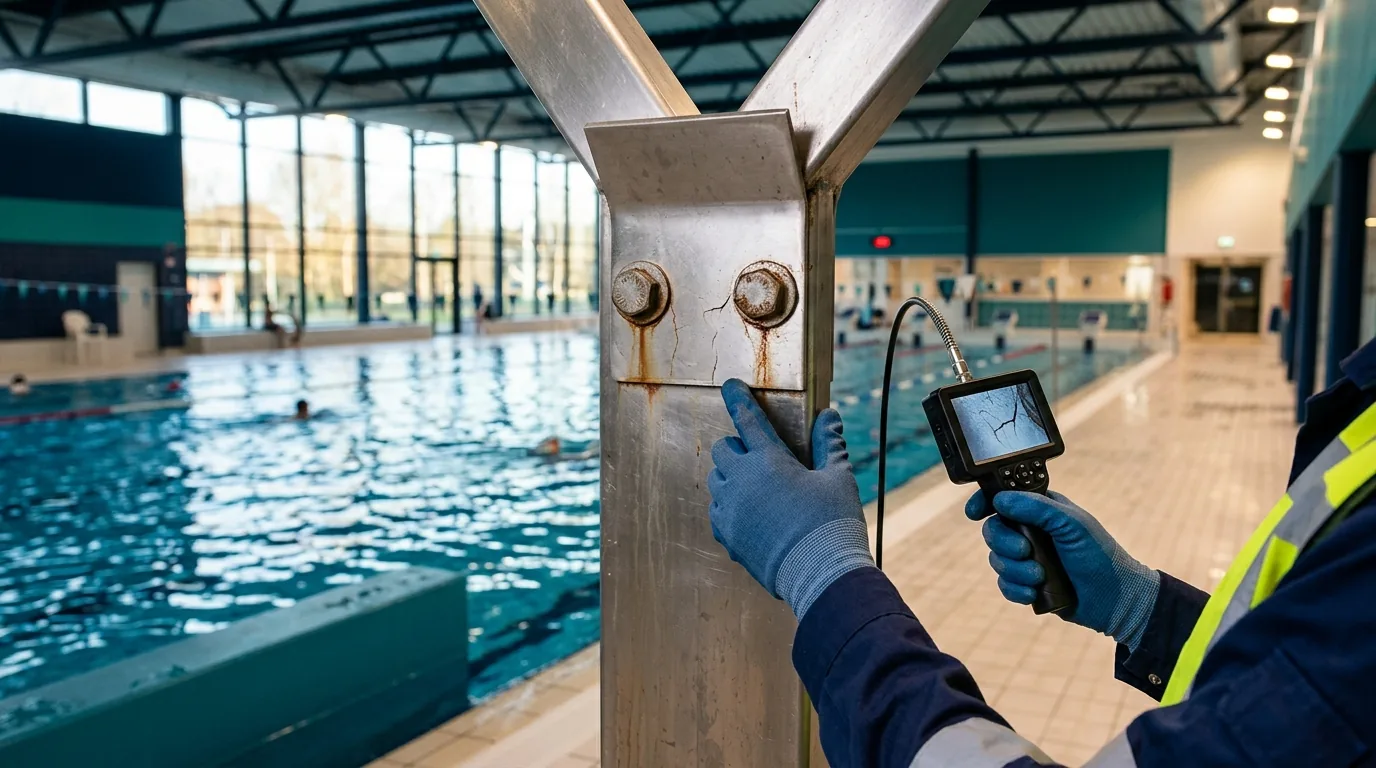
Discover how to detect stress corrosion in swimming pool structures at an early stage. Learn about effective inspection methods to prevent dangerous cracking in RVS and comply with NEN 9200 (Dutch standard — not automatically applicable as UK or US law).

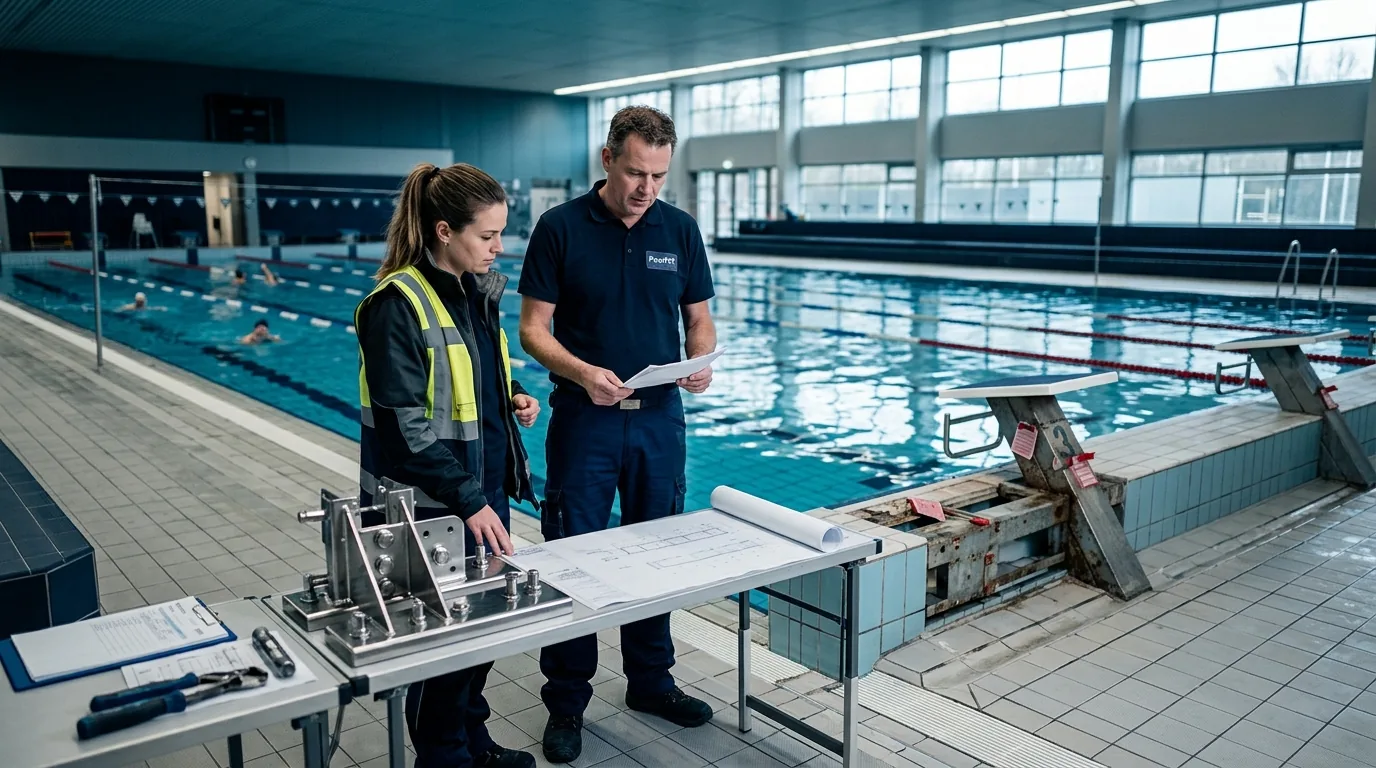
How a municipal swimming pool went from 'insufficient' to documented against the stated Dutch technical reference in 6 weeks — including ROI calculation.

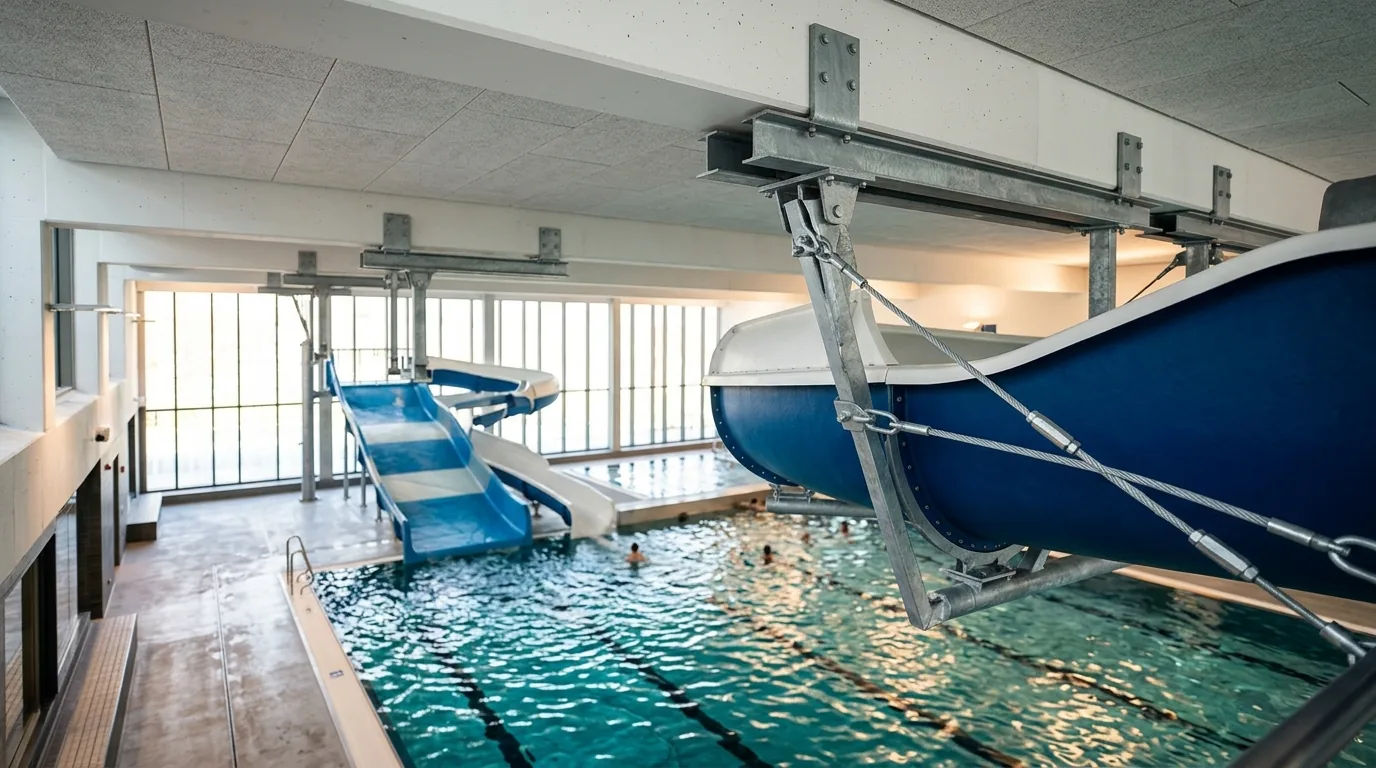
Ceiling structures, waterslide suspensions, and canopies: an explanation of modern safe design including redundant safety cables.

If A2/A4 RVS is no longer sufficient, what is? We compare super-austenitic 1.4529, coated steel, and other options on cost, lifespan, and safety.

Not all RVS needs to be removed immediately. We show you how to prioritize based on risk: which bolts absolutely must go, which can stay, and which require extra inspection.

The 2012 Dutch regulatory reference (and its successor, the Dutch regulatory reference) places responsibility on the owner/manager. Here you will find the relevant articles for swimming pool fasteners.

Which triggers obligate you to conduct a formal inspection of RVS fasteners? And what timeframes apply under NEN 9200 (Dutch standard — not automatically applicable as UK or US law)?

The short answer: not generally. However, under NEN 9200 (Dutch standard — not automatically applicable as UK or US law) and the Dutch regulatory reference, strict requirements apply, which means that traditional RVS often no longer suffices in practice.

Chloride is the silent killer of stainless steel. We show why A4-RVS, which lasts indefinitely in industry, can fail in a swimming pool within 5 years.

Stress corrosion cracking is the main cause of sudden failure of RVS fasteners in chlorinated atmospheres. We explain the mechanism step by step.

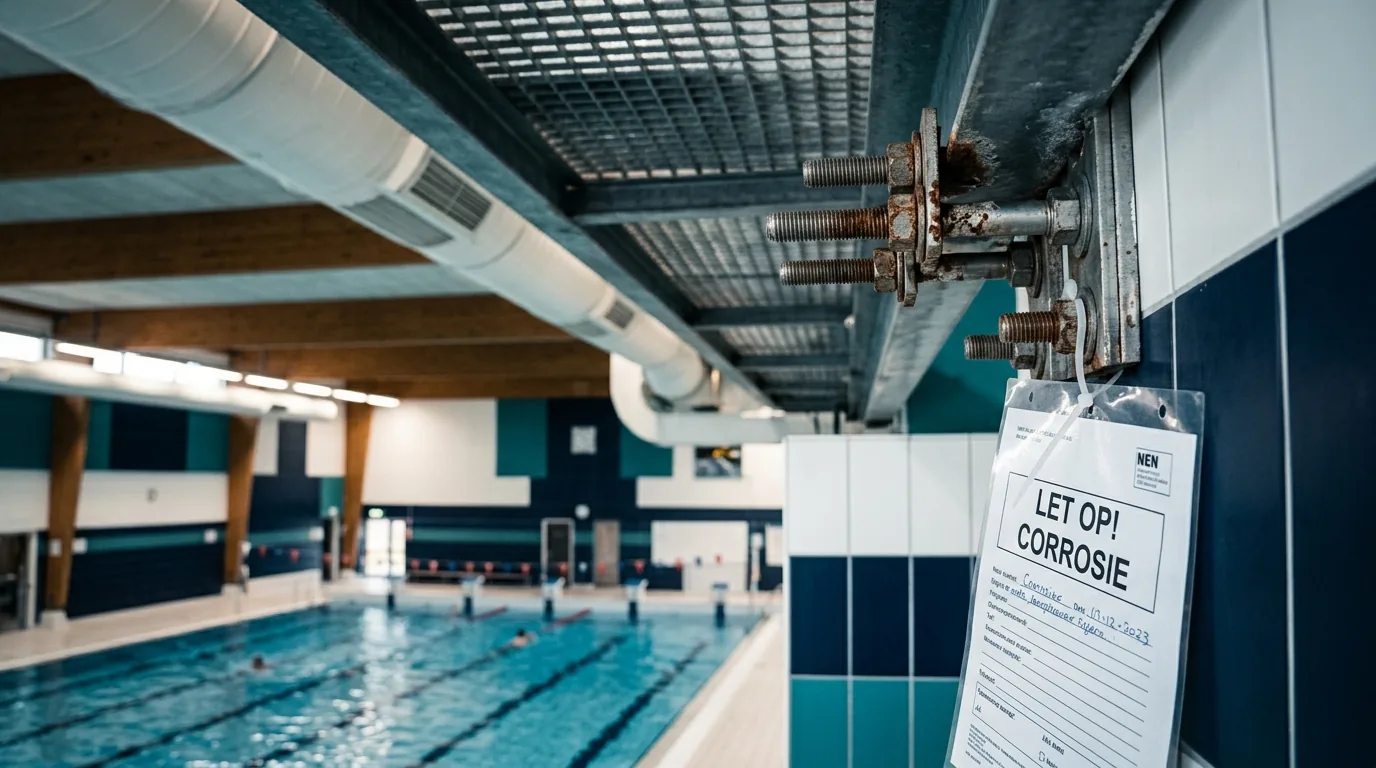
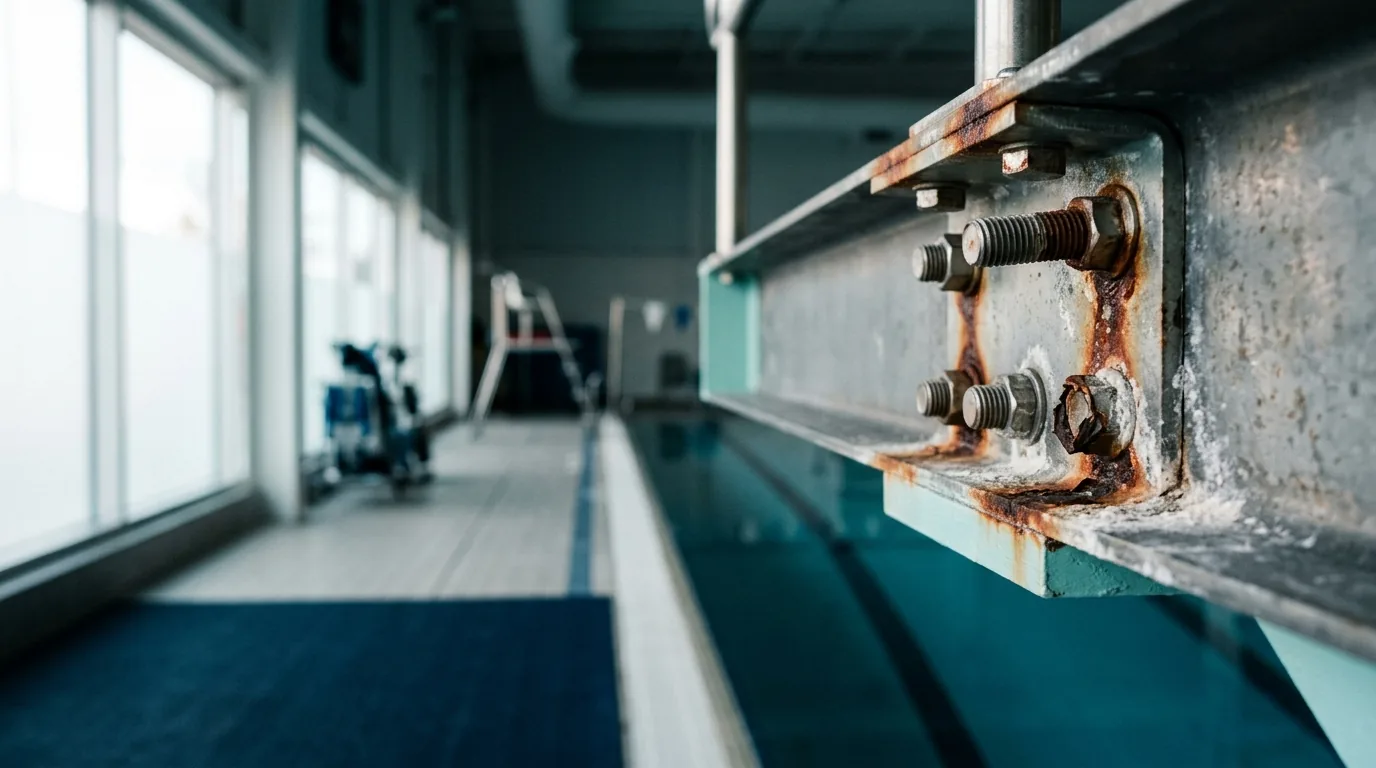
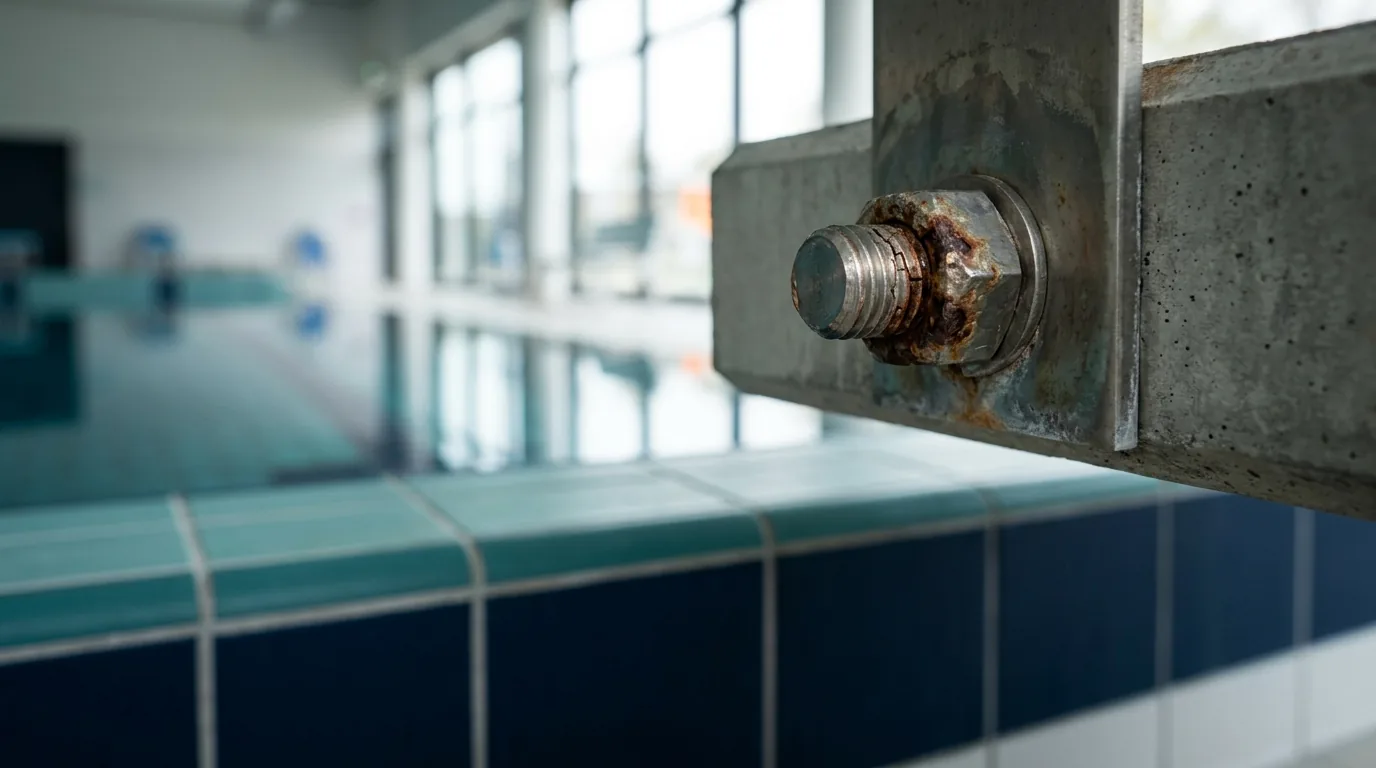
RVS appears safe and durable, but in chlorine environments, even A4 or 316L can fail silently. An overview of the risks for pool managers.
Safety requirements and liability legislation vary by country. This quick check provides technical risk guidance and does not replace a professional inspection or local legal advice.
If an accident happened tomorrow, could you demonstrate that the correct fastening materials were used?
Public and commercial swimming pools can contain safety-critical fasteners exposed to an extremely aggressive environment.
Incorrect or unsuitable materials can create a serious safety risk.
Check your potential Safety & Liability Risk in approximately 60 seconds.
Safety requirements and liability legislation vary by country. This quick check provides technical risk guidance and does not replace a professional inspection or local legal advice.