The impact of a safety incident in the swimming pool
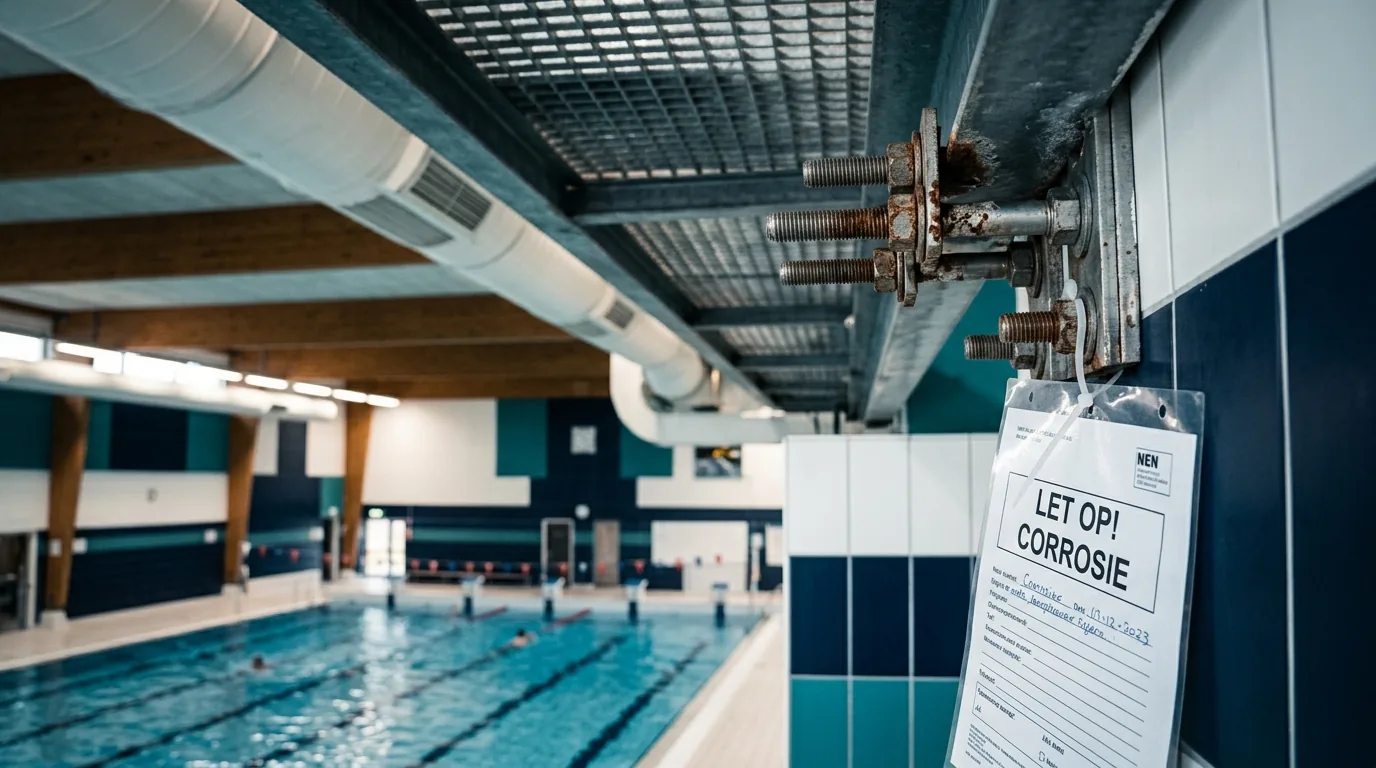
Over the past decades, Dutch swimming pools have been repeatedly shaken by serious accidents. A recurring cause of swimming pool accidents involving RVS is the failure of suspension structures. Often, this involves fastening materials that are unsuitable for the aggressive atmosphere of an indoor swimming pool.
When load-bearing components weaken invisibly, the consequences are incalculable. The risk of a collapsing ceiling in a swimming pool or falling installations is real when managers and installers underestimate the risks of corrosion. These incidents have led to stricter regulations and greater awareness within the industry.
Lessons from the past: Tilburg and other cases
One of the most well-known and tragic examples is the incident in Tilburg in 2011. In this case, loudspeakers detached from the ceiling due to the failure of stainless steel fasteners. This incident brought to light a structural problem within swimming pool construction: the incorrect use of standard RVS in a chlorine-rich environment.
A similar SCC incident in a swimming pool in the Northern Netherlands involved a suspended ceiling that partially collapsed. Although fortunately there were no casualties, the material and reputational damage was enormous. In both cases, the root cause analysis pointed to the same phenomenon: stress corrosion cracking (SCC) due to incorrect material choices.
Why standard RVS fails invisibly
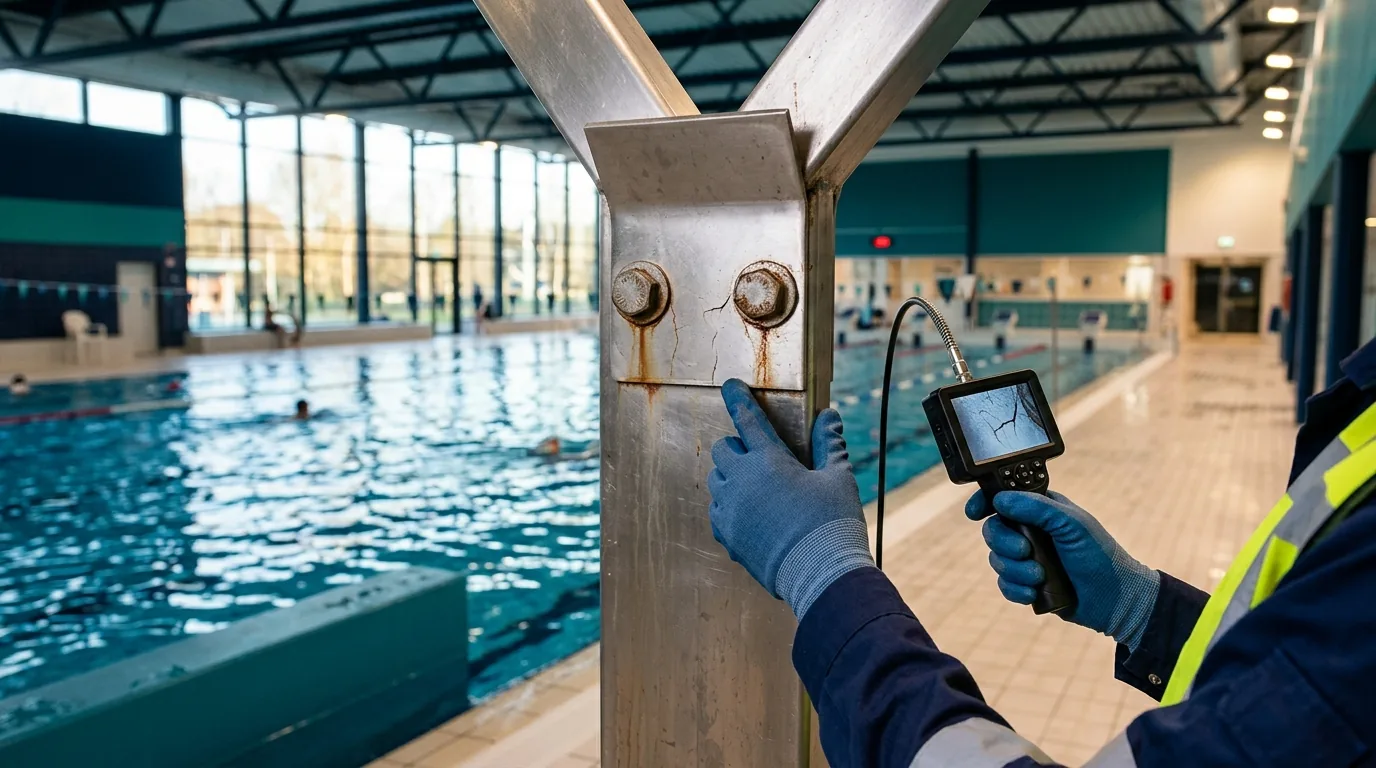
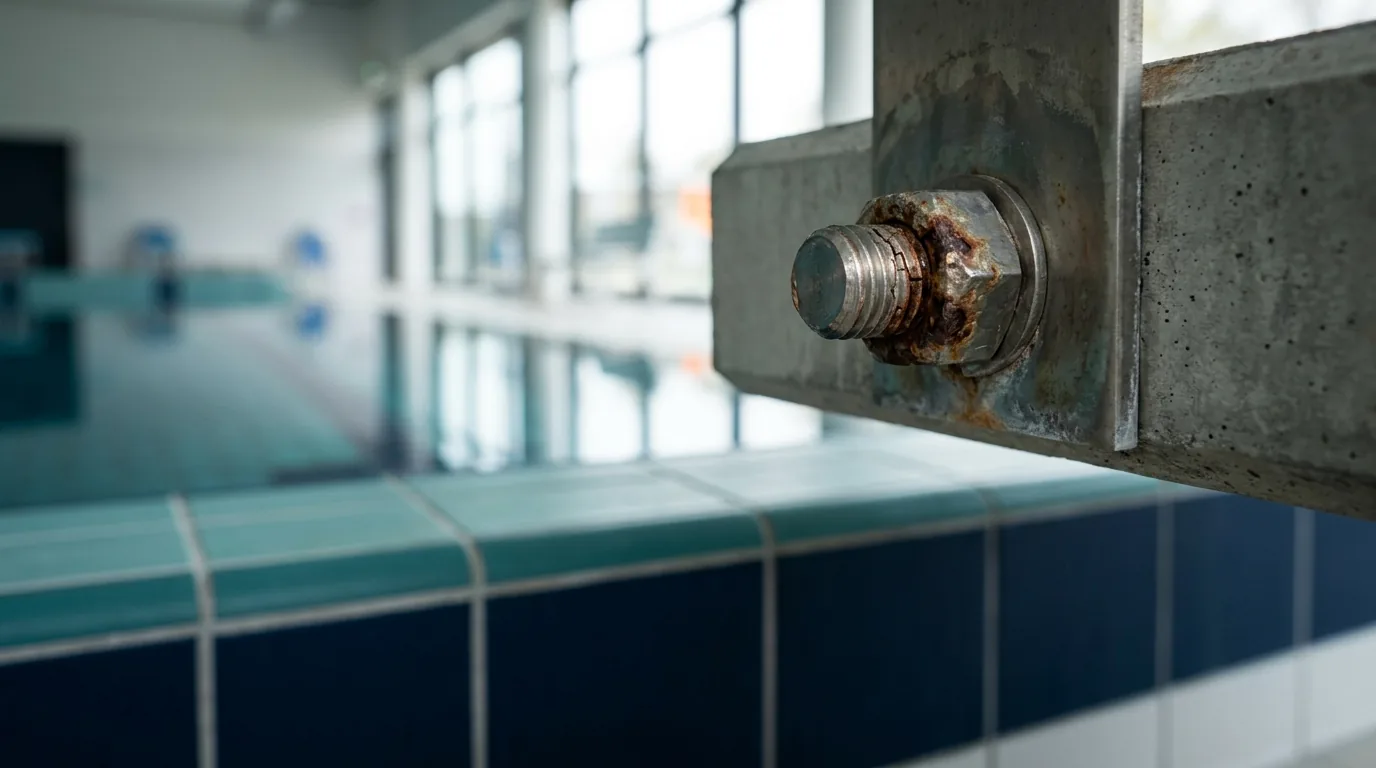
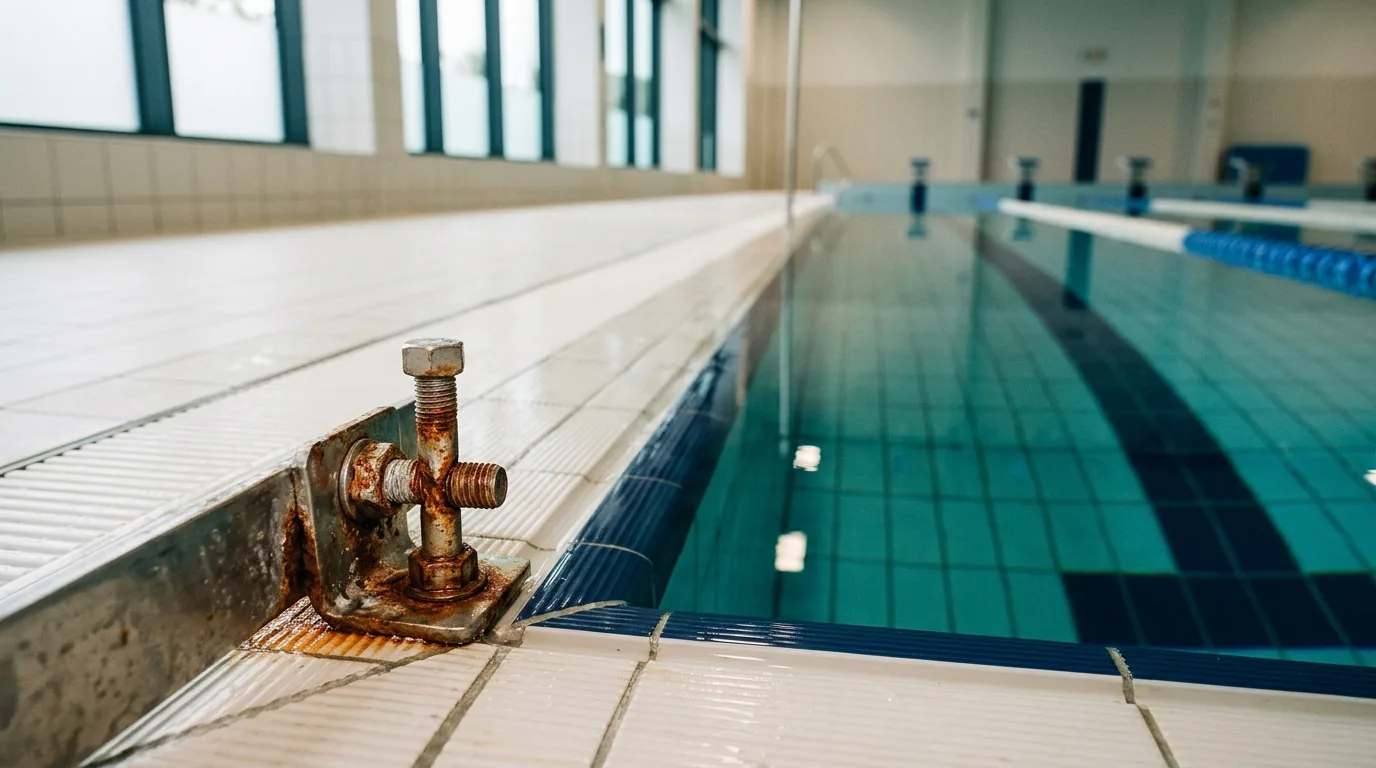
Stress corrosion cracking, or SCC, is a treacherous process. It occurs when standard stainless steel (such as A2/304 or A4/316) is exposed to a combination of mechanical tensile stress and a corrosive environment. In indoor swimming pools, chloramines released from the pool water form the ideal catalyst for this process.
What makes SCC particularly dangerous is that it takes place at a microscopic level. While the surface of a bolt or anchor may appear visually intact, hairline cracks propagate straight through the crystal structure of the metal. This ultimately leads to an abrupt and unexpected fracture of the material.
- SCC occurs under combinations of tensile stress, high temperatures, and chlorides.
- Standard RVS A2 and A4 are not resistant to this specific load.
- Failure often happens suddenly and without prior visual warnings.
Management, inspection, and the NEN 9200 (Dutch standard — not automatically applicable as UK or US law)
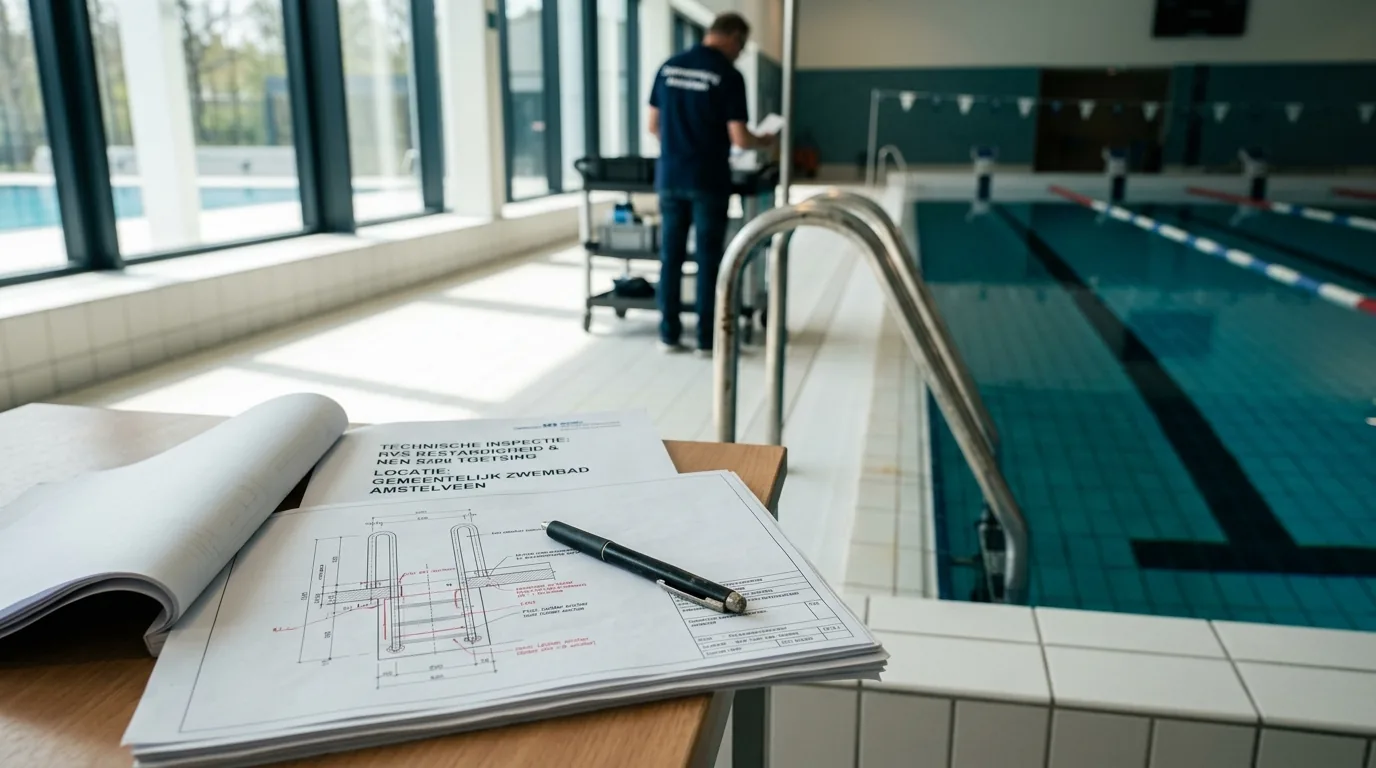
To prevent a recurrence of these incidents, it is crucial that pool managers and contractors work according to the latest standards. The NEN 9200 (Dutch standard — not automatically applicable as UK or US law) provides clear guidelines for the material selection and inspection of RVS applications in indoor swimming pools. The Besluit bouwwerken leefomgeving (Dutch regulatory reference) also sets requirements for structural safety.
According to these guidelines, only high-alloy materials such as 1.4529 may be used for load-bearing structures in the swimming pool atmosphere. Existing structures where the material type is unknown require periodic and specialized inspections to ensure their integrity.
Liability and the Dutch regulatory reference
With the introduction of the Dutch regulatory reference voor het bouwen (Dutch regulatory reference), the burden of proof for builders and installers has been significantly increased. It is no longer sufficient to assume that a structure is safe; you must be able to demonstrate this with certificates and inspection reports.
At PoolFIX, we therefore advise installers and buyers to work exclusively with traceable, certified fastening materials. This not only limits legal liability after completion but, above all, guarantees a safe swimming environment for every visitor.