
PoolFIX
PoolFIX coated StoreLogin
  1. Home
  2. Blog
  3. When should you replace RVS in a swimming pool?
All articles
Solution 22 February 2026 5 min read

When should you replace RVS in a swimming pool?

Not all RVS needs to be removed immediately. We show you how to prioritize based on risk: which bolts absolutely must go, which can stay, and which require extra inspection.

When should you replace RVS in a swimming pool?

In this article

  1. 1. Not everything old is dangerous
  2. 2. Three risk classes — three strategies
  3. 3. How do you know which connection belongs to which class?

PoolFIX material hierarchy

PoolFIX coated is assessed first against validated product/application rules. 1.4529 HCR / Alloy 926 is a restricted, pre-approved ground-level exception within 1.0 metre / 3.3 ft of the water and is never for roofs, ceilings, overhead or suspended applications.

Not everything old is dangerous

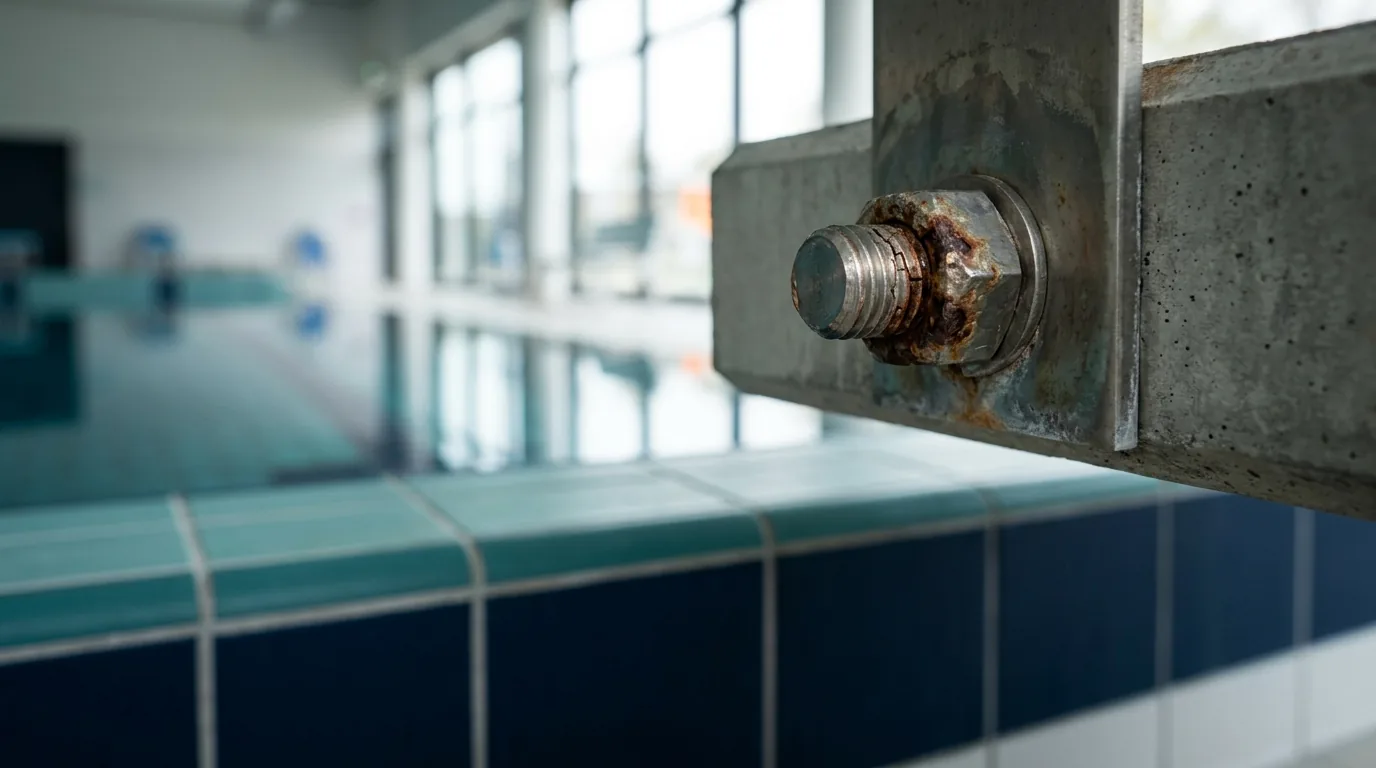
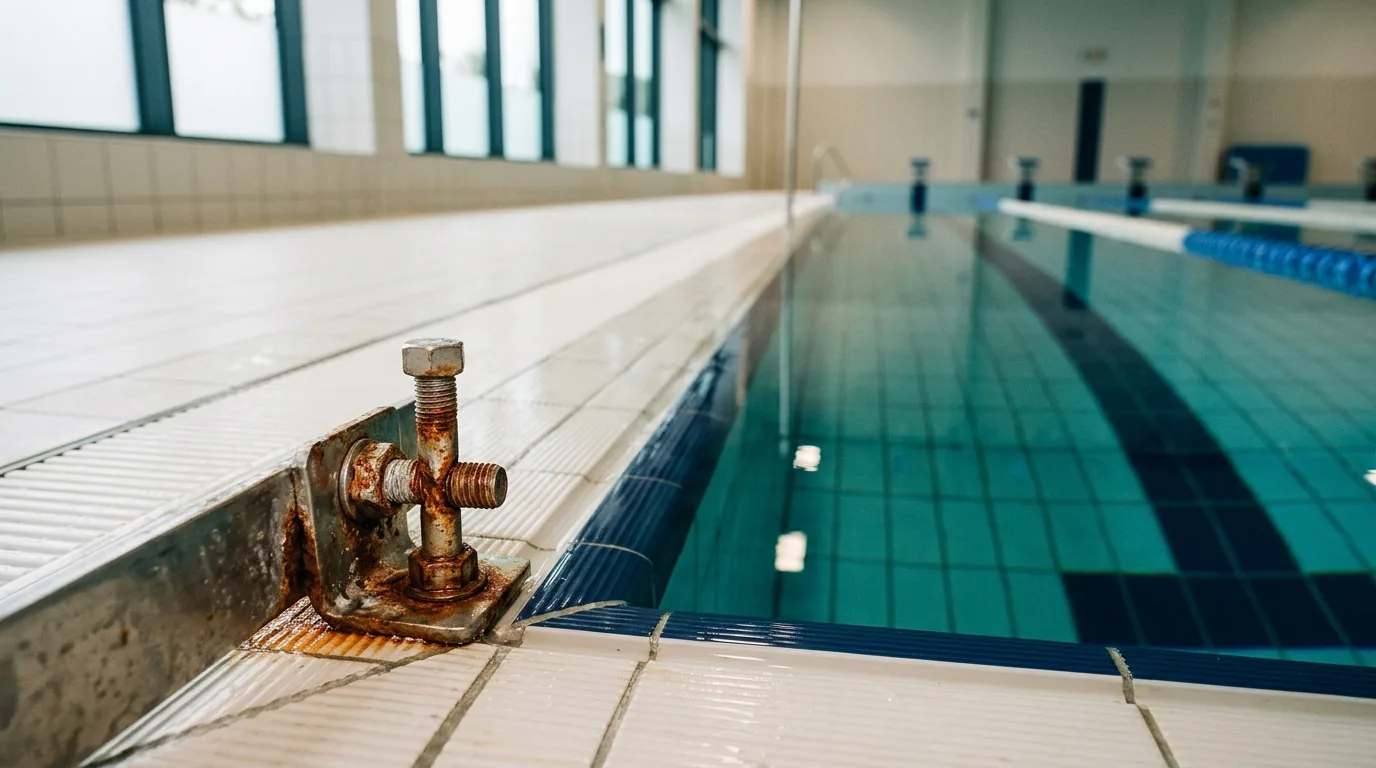
If you immediately replace every RVS bolt in your pool, you will likely spend a lot of money on points that are not critical at all. The correct approach is risk-based: which connections are truly critical to safety, and which are not?

Three risk classes — three strategies

Below is a workable prioritization model:

  • Class A (immediate replacement): overhead fastenings above the public, handrails, slide foundations — failure here has direct injury consequences.
  • Class B (replace within 12 months): structures under permanent tensile load in the splash zone, older than 10 years.
  • Class C (monitor): non-safety-critical fastenings more than 1m above the waterline — visual inspection every 12 months.

How do you know which connection belongs to which class?

A professional risk analysis according to NEN 9200 (Dutch standard — not automatically applicable as UK or US law) classifies every connection. Do you not have a risk analysis? Then that in itself is an action point. Our Compliance Check gives you an initial indication within 60 seconds.
Which RVS in your pool falls under Class A?

Take the Compliance Check or upload your inspection report for an immediate assessment.

Start the Compliance Check Request advice from a specialist

FREE DOWNLOAD

Free: Pool Safety Whitepaper 2026

NEN 9200, stress corrosion and inspection requirements — combined in one practical PDF.

Read also

What is stress corrosion cracking in natatoriums?
Risk & Awareness

What is stress corrosion cracking in natatoriums?

Why stainless steel is dangerous in natatoriums
Risk & Awareness

Why stainless steel is dangerous in natatoriums

Case Study: Risk analysis of a swimming pool structure
Case & Authority

Case Study: Risk analysis of a swimming pool structure

Is RVS banned in natatoriums?
Regulation & Pressure

Is RVS banned in natatoriums?

Request quote?

Request a quote based on the documented product and application route. Technical review remains required when no validated automatic match exists.

Request quote
Supplied from the Netherlands
Availability shown per product
Delivery confirmed per order

Sitemap

HomePoolFIX coated fastenersPoolFIX coatedMaterial AdvisorCodes & StandardsAboutBlogACRATON® DolphinContact
Pool FIX

Application-specific material selection, product documentation and batch traceability where applicable.

Contact

Rivierkade 9A

4931AA Geertruidenberg

The Netherlands

Tel: +31 162 69 57 58

info@poolfix.nl

© 2026 Pool FIX B.V. All rights reserved.

PoolFIX Safety & Liability Check

Safety requirements and liability legislation vary by country. This quick check provides technical risk guidance and does not replace a professional inspection or local legal advice.

IS YOUR SWIMMING POOL SAFE?

If an accident happened tomorrow, could you demonstrate that the correct fastening materials were used?

Public and commercial swimming pools can contain safety-critical fasteners exposed to an extremely aggressive environment.

Incorrect or unsuitable materials can create a serious safety risk.

Check your potential Safety & Liability Risk in approximately 60 seconds.

Safety requirements and liability legislation vary by country. This quick check provides technical risk guidance and does not replace a professional inspection or local legal advice.