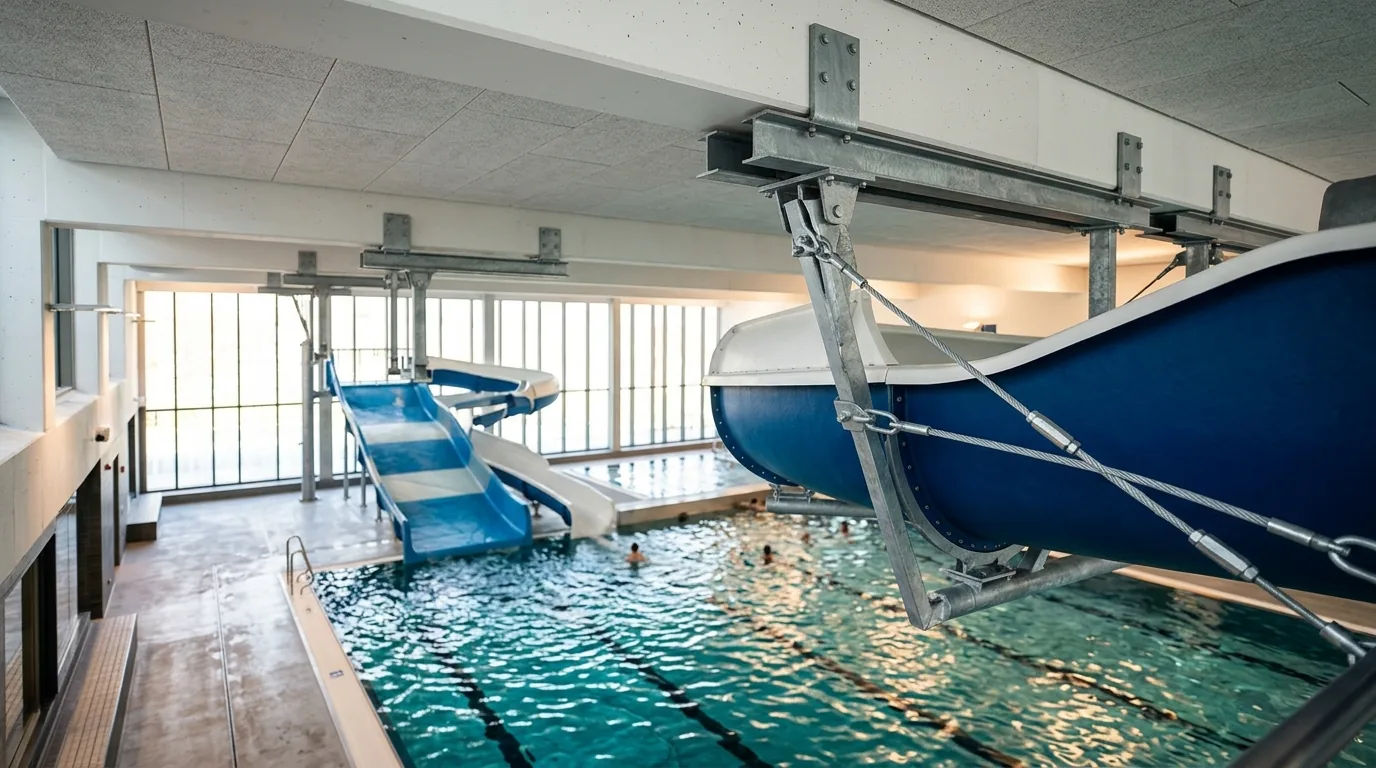
Three pillars of safe suspension design
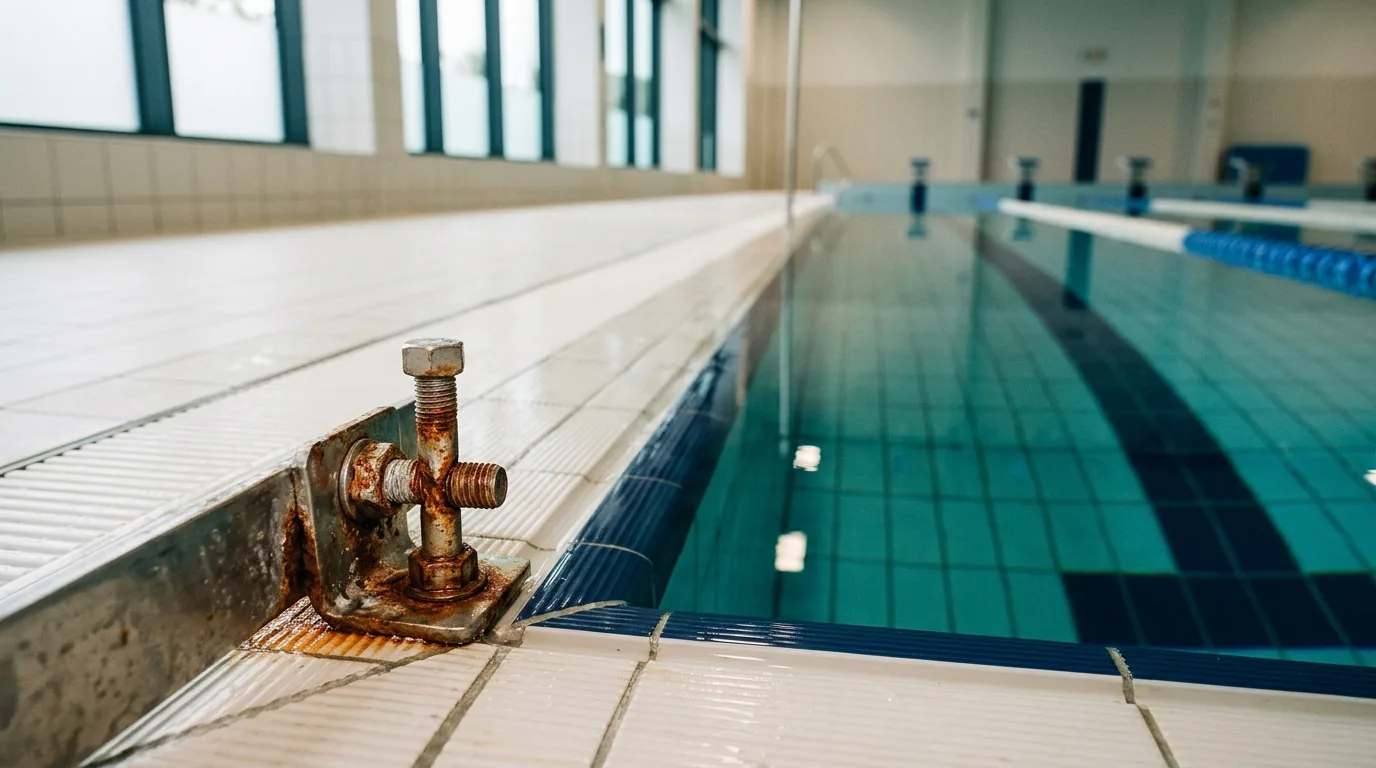
- Primary fastening in certified material (1.4529 or equivalent).
- Redundant secondary safety cable — in case the primary connection fails.
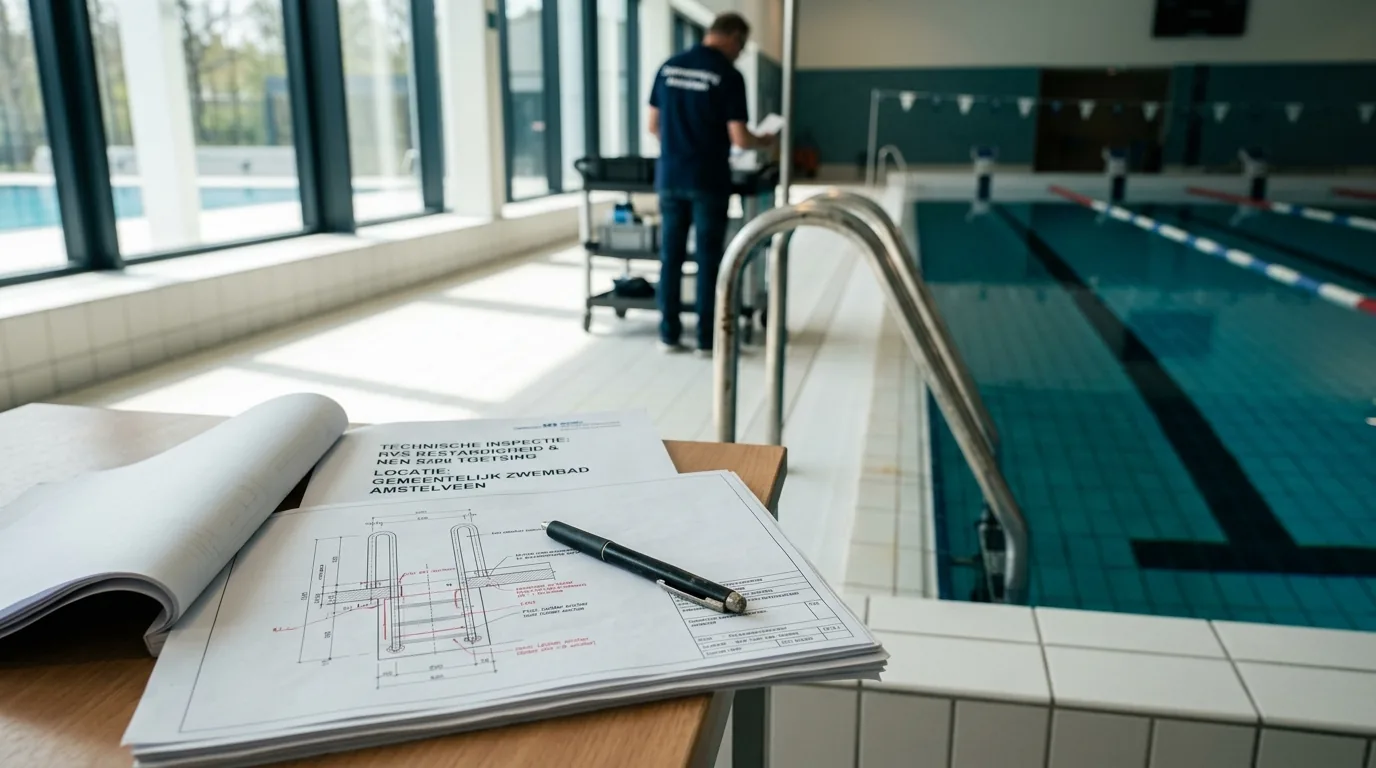
- Documentation and periodic inspection — no design is safe without maintenance.
The role of the secondary safety cable
For ceiling suspensions above the public (such as ceiling panels, sound absorbers, lighting), a redundant safety cable is now the standard. If the primary connection suddenly fails, the coated steel cable catches the load until the technician arrives.
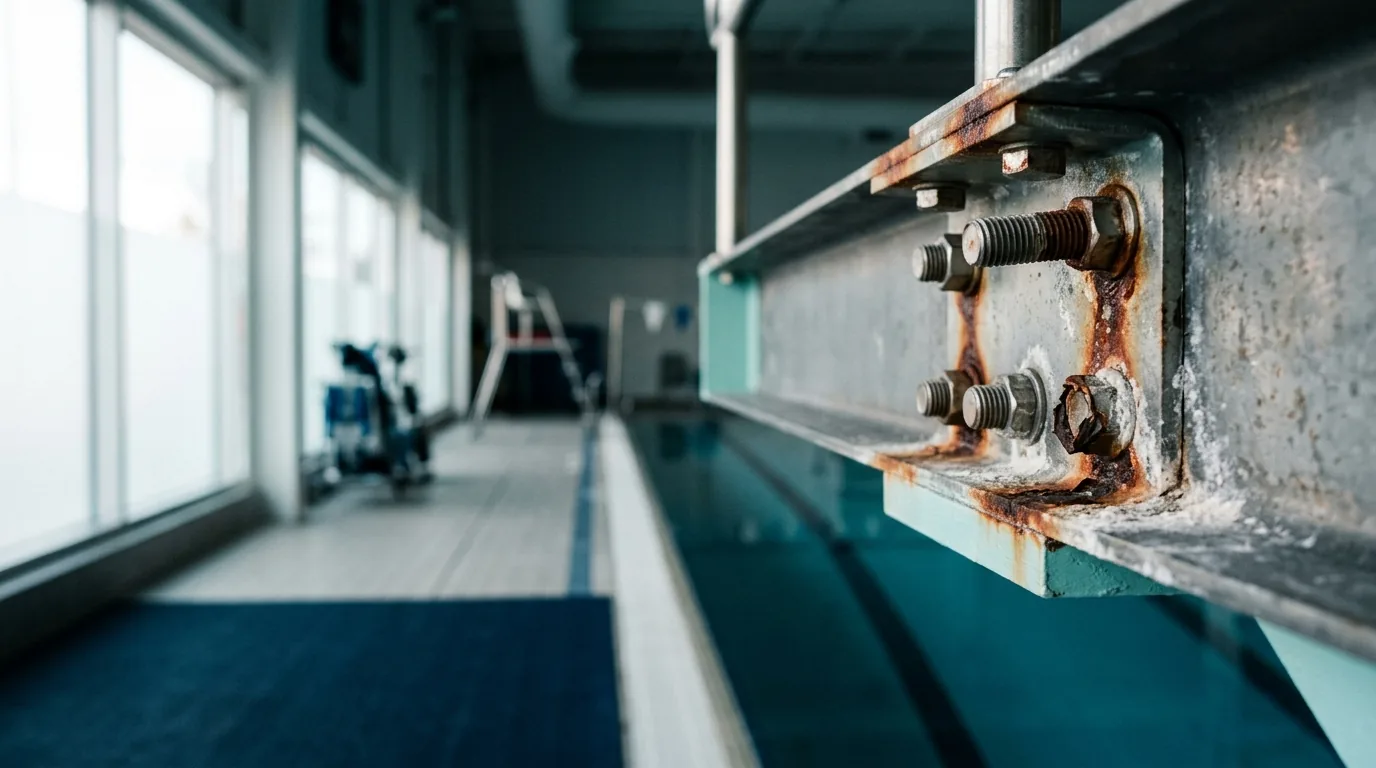
Important: this cable must also be pool-resistant. A standard steel wire from a hardware store will actually corrode faster in a chlorine environment than the fastening it is supposed to secure.
Practical example: a renovation in 2025
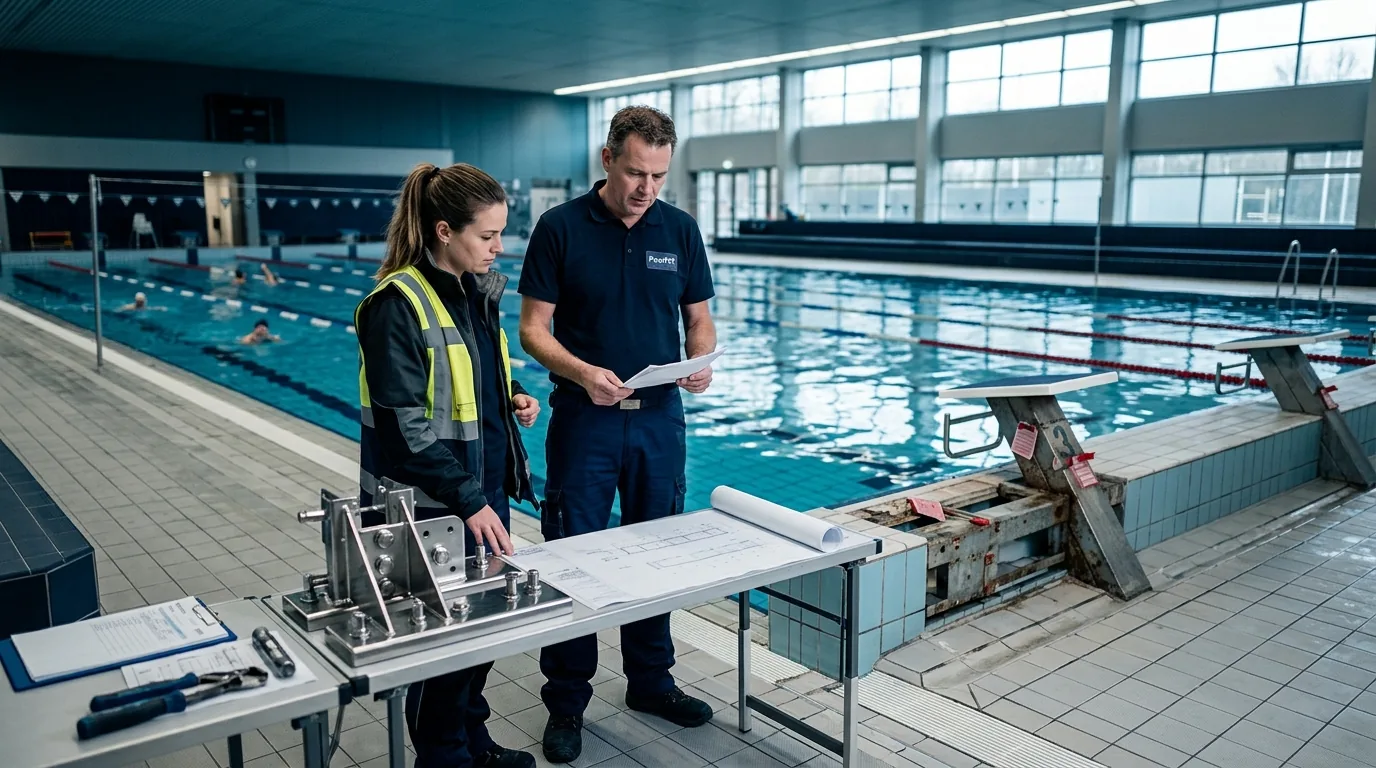
At a municipal indoor pool, the recommendation was to completely replace all ceiling fastenings — with a price tag of nearly €80,000. The alternative approach: leaving existing RVS in place where risk analysis indicated it was Class C, only acutely replacing Class A, and adding a redundant PoolFIX safety cable to all suspension points. Result: a 65% cost saving and higher safety than the original design.